

Quick Answer: A study on the ketogenic diet and inflammation found that mice fed a ketogenic diet rich in long-chain saturated fats developed more inflammatory immune cells in several tissues. The researchers also tested related pathways in cultured mouse and human immune cells. That is worth understanding, but it doesn’t show that a particular keto dinner causes inflammation in people or that all ketogenic diets have the same effect.
Ask five people what a keto diet looks like and you might get five different plates. One has fish, olive oil and vegetables. Another has lots of cheese, butter and meat. Both may be low in carbohydrates, yet the fats they’re built around are not identical. A new laboratory study looked closely at that difference.
The paper appeared in Science Advances on November 13, 2026. It focused on how types of dietary fat can affect immune-cell behavior under ketogenic conditions.
What the ketogenic diet and inflammation experiments involved
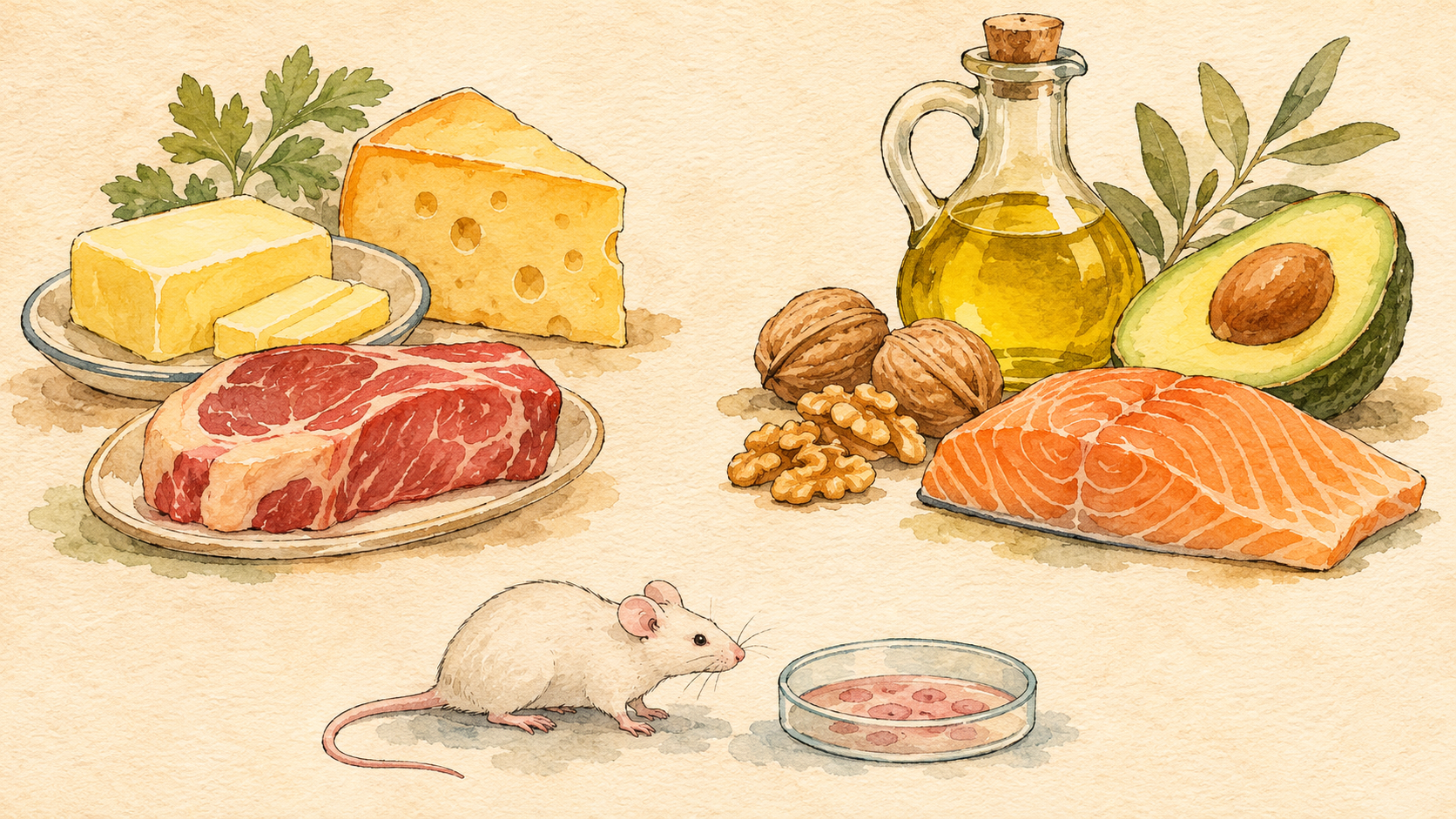
Researchers fed mice ketogenic diets and examined immune cells in tissues using several laboratory techniques. They observed an accumulation of proinflammatory macrophages, a class of immune cells that can respond to injury and infection. They also looked at macrophages grown in culture, including human cells, to test how different fatty acids affect their behavior.
Long-chain saturated fatty acids promoted a more inflammatory pattern in the tested immune cells. Medium-chain and unsaturated fats did not show the same response in those experiments. The scientists also identified changes in fat-related molecules and a signaling pathway called cGAS-STING. When that pathway was disrupted in a specially engineered mouse model, the observed inflammatory effect was reduced.
Does that mean keto is inflammatory?
Not as a universal statement. The study helps explain why laboratory findings about ketogenic diets can point in different directions. It suggests that the kind of fat may affect immune responses, at least in the experimental systems examined. It doesn’t establish a clinical rule that every person who eats keto will develop harmful inflammation.
Human cells in a dish are not the same as a human being eating meals over months. Real diets involve proteins, carbohydrates, fiber, portions, existing conditions and medications. Mouse results can point scientists toward mechanisms to test, but they cannot replace controlled clinical research on real-world outcomes.
Why the type of fat matters to this story
The label ‘high fat’ hides meaningful differences. Fatty acids vary in their chain lengths and chemical structures, and cells respond differently to them. The study makes the broad question ‘Is keto healthy?’ less useful than asking exactly what people are eating and which health outcome is being measured.
That doesn’t mean the research provides a recipe for building a medically safer ketogenic diet. The experiments did not compare complete long-term meal plans in people, and the study did not measure heart attacks, diabetes cases or how humans felt on those diets.
Should you change what you eat?
If you’re considering a major dietary change, especially for diabetes, epilepsy or another medical condition, evidence from human studies and your individual situation should guide the decision. The basic idea of eating varied nutrient-dense foods still matters, whether or not a diet carries a popular name.
Our article on peanut-related lipids and diabetes also shows why the details of fat biology can be interesting without proving that one food prevents a disease. These are different studies, not two parts of the same experiment.
Healthy Routine Lab take: This is an intriguing mechanism story, not a new diet verdict. The fat source changed the laboratory response. The next question is whether similar patterns meaningfully change human health.
Sources
Wei S-J et al. Science Advances (November 2026), original laboratory study.
PubMed abstract and study details.
For educational purposes; not medical advice or an instruction to adopt or stop a therapeutic diet.