Quick Answer: Could squeezing a small handgrip help with blood pressure? In a trial involving 67 adults already taking hypertension medication, four weeks of supervised handgrip sessions were linked with slightly lower blood pressure readings during waking hours compared with a control group. The researchers didn’t find a clear difference across the full 24 hours, and the study wasn’t a test of replacing medication with exercise.
A handgrip device doesn’t look like much of a workout. That’s part of what makes this idea interesting. Instead of going for a run, participants squeezed against resistance while sitting still. Researchers wanted to see whether this kind of muscle effort would make a measurable difference in blood pressure.
A randomized clinical trial published online in October 2026, in the November issue of Clinical Physiology and Functional Imaging, compared handgrip exercise with knee-extension exercises and with a control group.
How the isometric exercise and blood pressure trial worked
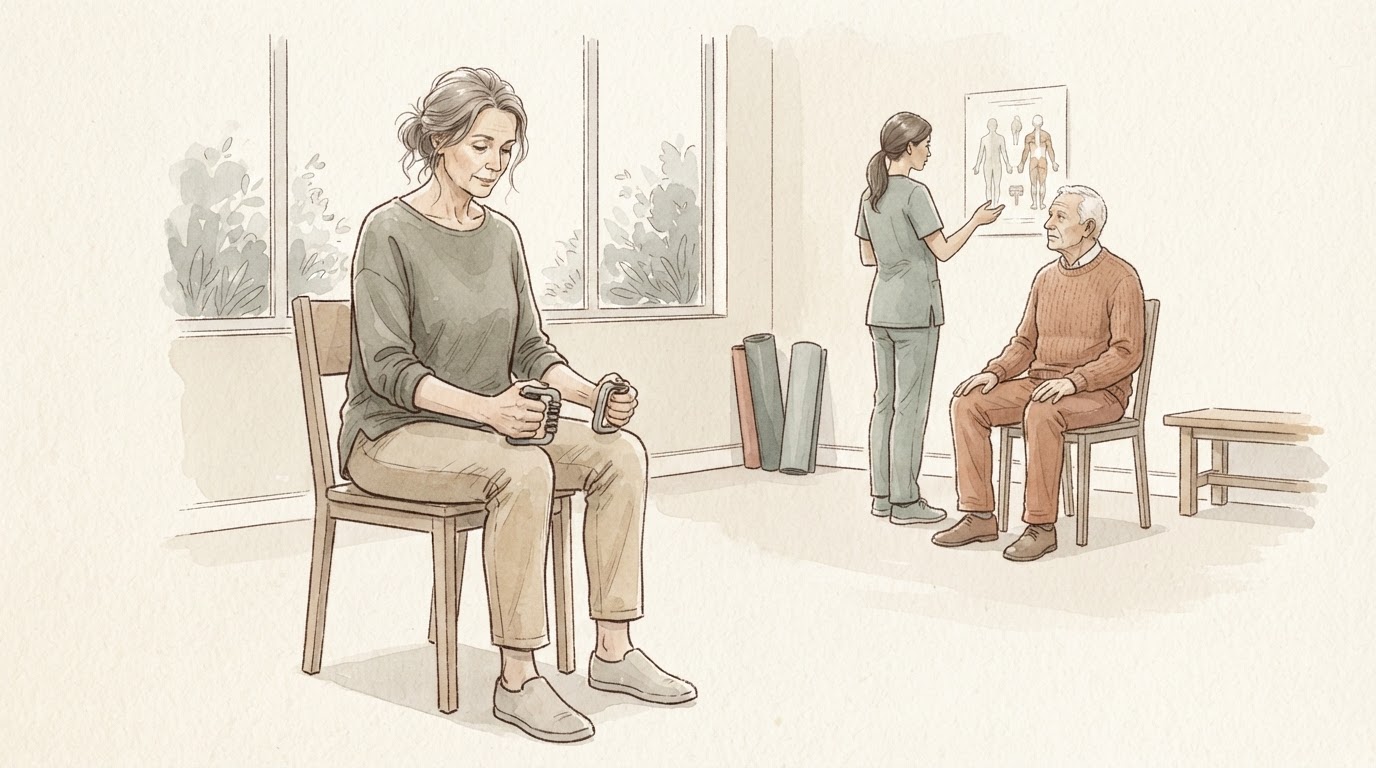
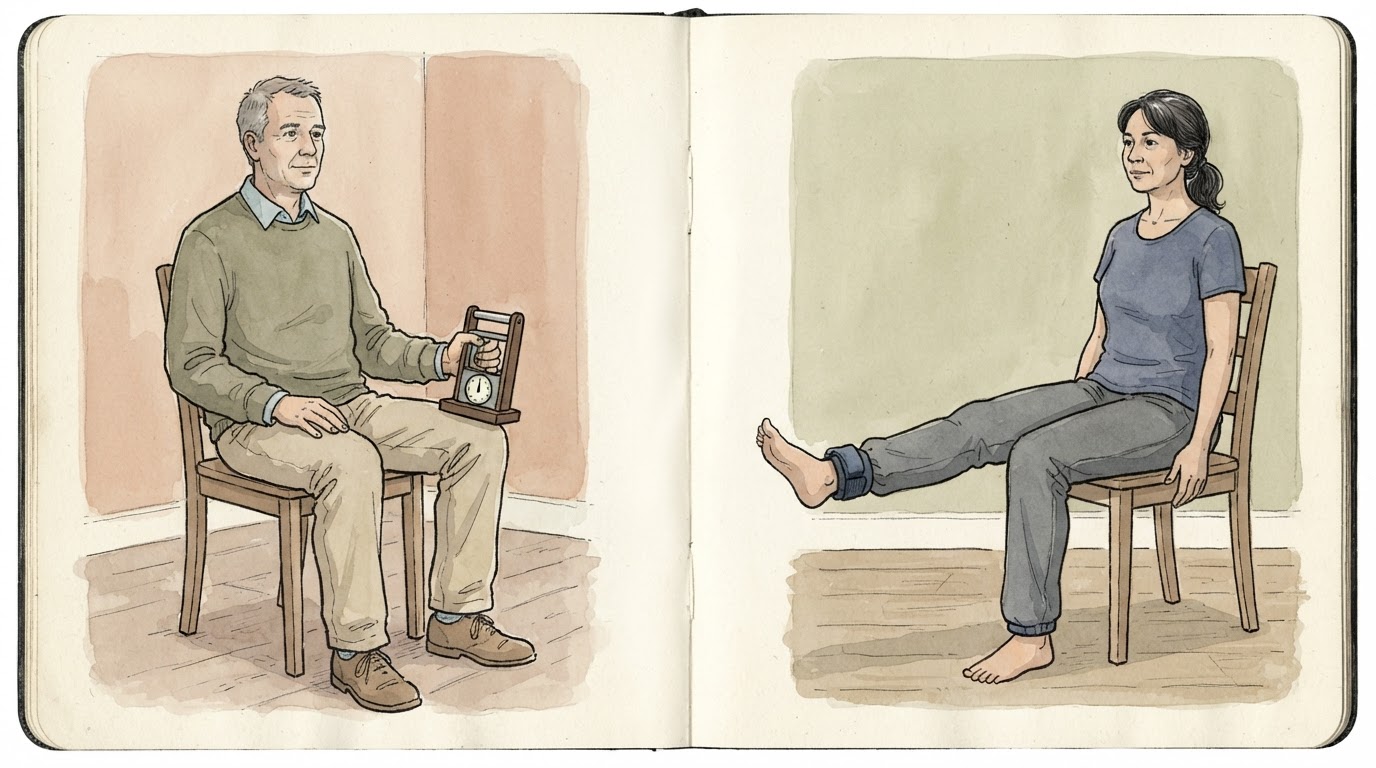
Researchers in Brazil enrolled 67 adults aged 40–70 with medically treated hypertension. All were receiving antihypertensive medication. Participants were assigned to one of three groups: handgrip training (22 people), isometric knee extensions (23 people), or a control group (22 people). The groups attended three supervised sessions a week for four weeks, totaling 12 sessions.
The exercise groups performed four two-minute contractions at 30% of their measured maximum effort, alternating sides and taking one-minute breaks. The control group attended visits without performing the exercise. Participants were instructed to continue their usual medication and routines, rather than replace treatment with the training protocol.
The investigators used an ambulatory blood-pressure monitor after the intervention, obtaining readings across waking and sleeping periods. This is a more informative view than a single reading taken in a clinic, although the researchers did not obtain comparable ambulatory baseline data before training for the full study sample.
What changed in the blood pressure readings?
After adjustment for baseline office blood pressure, the handgrip group had a mean awake systolic pressure of 121.8 mmHg, compared with 124.2 mmHg in the control group. Awake diastolic readings averaged 76.3 and 80.8 mmHg, respectively. The between-group comparisons met the trial’s statistical significance threshold.
Those adjusted values imply a relatively small daytime separation—about 2.4 mmHg systolic and 4.5 mmHg diastolic—but the numbers must not be presented as the amount an individual participant’s blood pressure fell from baseline. Only post-intervention ambulatory blood pressure was measured in the study’s final design; baseline office readings were used for statistical adjustment.
The researchers reported no significant between-group differences for 24-hour averages or for readings recorded during sleep. Knee extensions did not significantly outperform the control group, and the two exercise methods were not significantly different from each other. In other words, the finding was more specific than a broad claim that isometric exercise lowers all blood-pressure measures.
Why this isn’t a DIY treatment plan
The trial lasted four weeks, involved 67 people, and used trained supervision and individualized effort measurements. It did not establish which frequency, grip intensity or training duration would be most effective or safest for an unsupervised individual. Results also may not apply to people with uncontrolled hypertension, heart failure, kidney disease, or other conditions excluded from the study.
Because the final protocol lacked baseline ambulatory monitoring, it is difficult to distinguish how much of the post-training difference reflects true change in each group, despite statistical adjustment for initial clinic pressure. Longer studies with baseline and follow-up ambulatory readings are needed to confirm durability and clinical importance.
How to interpret the finding in daily life
For people managing high blood pressure, established care still includes prescribed medicines when indicated, appropriate physical activity, dietary choices, and monitoring with a clinician. A supervised isometric program may become one useful adjunct, but it is not a substitute for a personalized treatment plan, and the trial did not test stopping medication.
Dietary approaches involve different evidence and safety questions. Our guide to beetroot and blood pressure medication interactions addresses one such issue; it was not part of this handgrip trial.
Healthy Routine Lab take: This is an interesting experiment, but the fine print is the story. The modest difference showed up in daytime readings, not around the clock. A handgrip isn’t a stand-in for blood pressure treatment.
Sources
Full-text original study at PubMed Central.
This article is educational and does not replace personal medical guidance, prescribed blood pressure treatment, or professional exercise assessment.
See also: Tea and Heart Health: What a Large Study Found About Temperature