
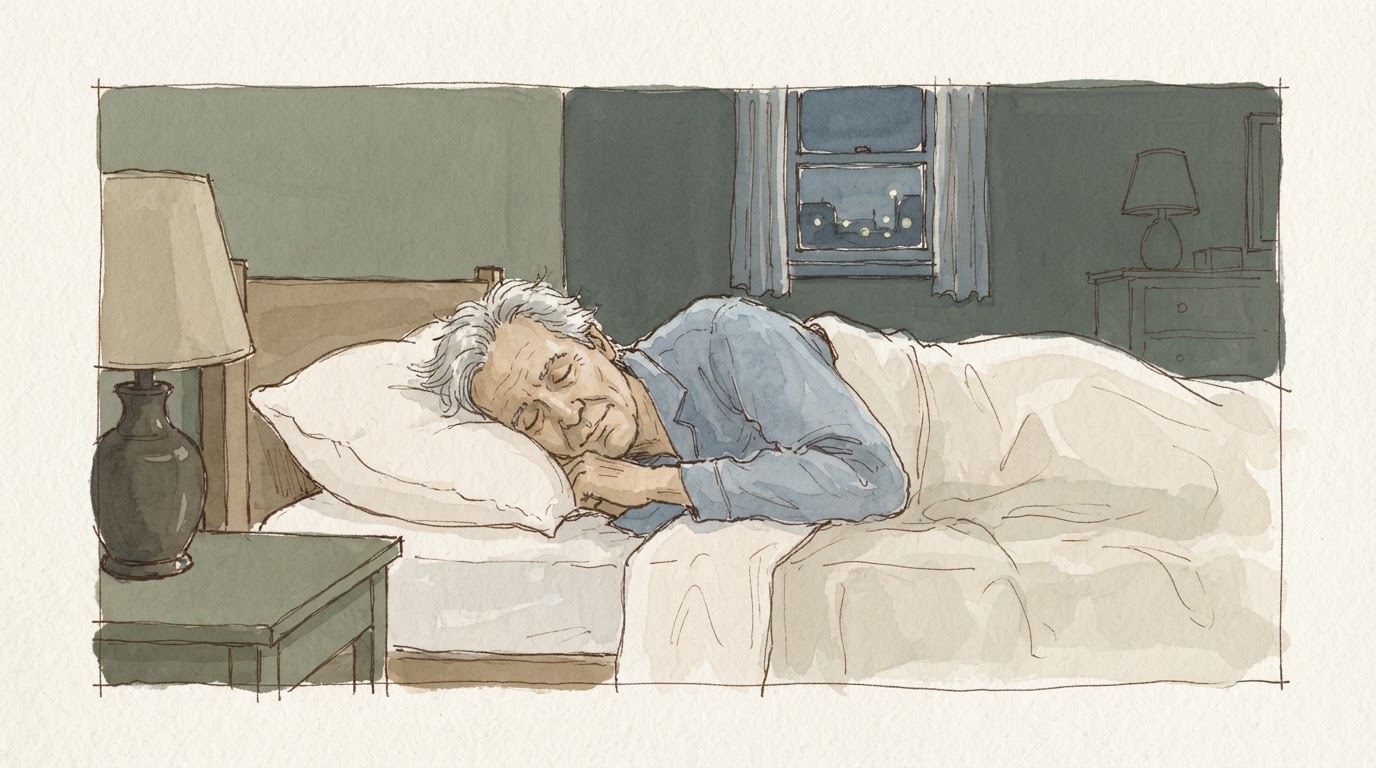
Quick Answer: You may have heard that your brain does some of its cleanup work while you sleep. New scans add an interesting piece to that story. Researchers found that the large waves of fluid they measured during sleep were weaker, on average, in older adults than in younger adults. They didn’t measure how much waste the brain removed, and they didn’t test a way to reverse the change.
Imagine watching the brain while someone sleeps, without waking them up. That’s roughly what researchers did using MRI and recordings of brain activity. Instead of claiming they had found the secret to better sleep, they looked at how fluid moves and how the brain’s blood vessels and electrical signals may help drive it.
The original paper appeared in Nature Aging on November 13, 2026. Rather than comparing memory supplements or ideal bedtimes, it examined how the nervous system and blood vessels work together to produce fluid movements during sleep.
What were the researchers actually looking at?
The glymphatic system is a proposed network of fluid-exchange pathways involved in removing waste products from brain tissue. Cerebrospinal fluid surrounds and cushions the brain and participates in transport processes. Yet observing fluid moving through a large brain structure is not identical to directly measuring clearance of waste proteins from individual brain cells.
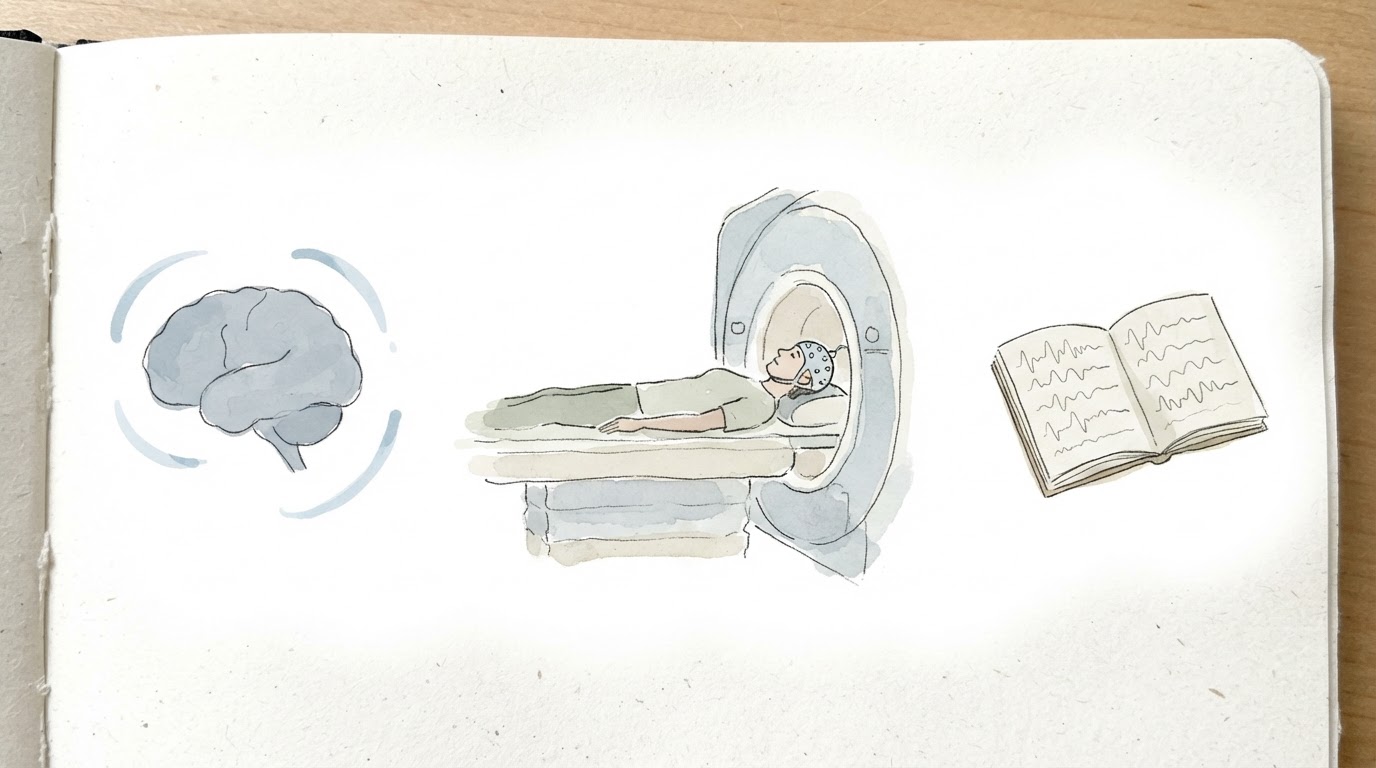
To examine the age question, the researchers recruited 31 younger adults aged 18–39 and 41 older adults aged 60–84. At nighttime sessions, they combined electroencephalography (EEG), which records electrical activity, with fast functional magnetic resonance imaging (fMRI). They looked for linked rhythms in brain electrical waves, blood oxygenation signals and cerebrospinal fluid movement. Not every participant necessarily produced a usable period of sleep during scanning.
The difference appeared most clearly during non-REM sleep
Younger participants generally showed a larger rise in low-frequency CSF movement as they entered non-rapid eye movement sleep. Older participants, on average, had weaker fluid waves and a smaller sleep-associated increase. In one reported comparison, the average change in the low-frequency CSF signal from wakefulness to sleep was 3.82 decibels in younger adults and 1.15 decibels in older adults. These are specialized signal measurements—not percentages of waste removed.
The study also linked weaker fluid waves with reduced slow-wave EEG activity and changes in broad blood-flow oscillations. During a separate awake testing session, participants completed sensory and breath-hold tasks. Those tests helped the investigators examine how neural activity and vascular responsiveness contribute to fluid movement.
Why good sleep alone may not explain every result
One of the paper’s most useful details is that the changes did not appear to arise from sleep patterns alone. Older adults also showed differences in vascular responses. That means two people with similar sleep duration might still differ in the fluid rhythms observed on a scan. The researchers also noted individual variation: some older adults retained strong fluid waves.
Reduced flow was associated with atrophy of frontal gray matter in some analyses, but this was not a dementia-outcome trial. The participants were not being treated for Alzheimer’s disease, and the researchers did not establish that CSF measurements predict who will develop cognitive impairment. A possible biomarker is not yet a clinical screening test.
Does this mean you need to change your sleep routine?
Not yet. It supports further research into sleep-related neural signals, blood-vessel function and CSF circulation. Other laboratory work has explored sound stimulation during sleep, but this study did not demonstrate that pink noise, headphones, a supplement or a new sleep schedule restores brain fluid flow in older adults. It would be premature to buy a product on that basis.
For everyday sleep difficulties, practical decisions should still be based on established sleep-health guidance and on identifying medical causes when symptoms persist. Our separate story on daily routine and sleep in older adults explains an observational study about pain and mood; that research did not measure CSF flow. They answer different questions.
The next research question is more important than the headline
Scientists now need to learn whether the MRI-measured fluid rhythms are reliable across repeated nights, how they relate to actual molecular clearance, and whether any intervention can safely and meaningfully change them. Longer studies would be needed to determine if the measurements predict later cognitive outcomes.
This new work advances an understanding of brain physiology in aging. It is not evidence that a specific sleep technique prevents Alzheimer’s disease, that an individual brain is ‘dirty,’ or that fluid flow can be judged from how refreshed someone feels in the morning.
Healthy Routine Lab take: The phrase ‘brain cleaning’ is memorable, but it’s easy to take too literally. The study measured fluid waves, not a nightly cleanup score. Keeping that difference in mind makes the discovery far more useful.
Sources
Bailes SM, Williams SD, et al. Nature Aging, November 13, 2026 — original study.
MIT research news via ScienceDaily, November 18, 2026.
Educational information only. This article is not medical advice or a recommendation for any sleep treatment.
See also: Exercise for Mild Cognitive Impairment: A Brain-Scan Trial