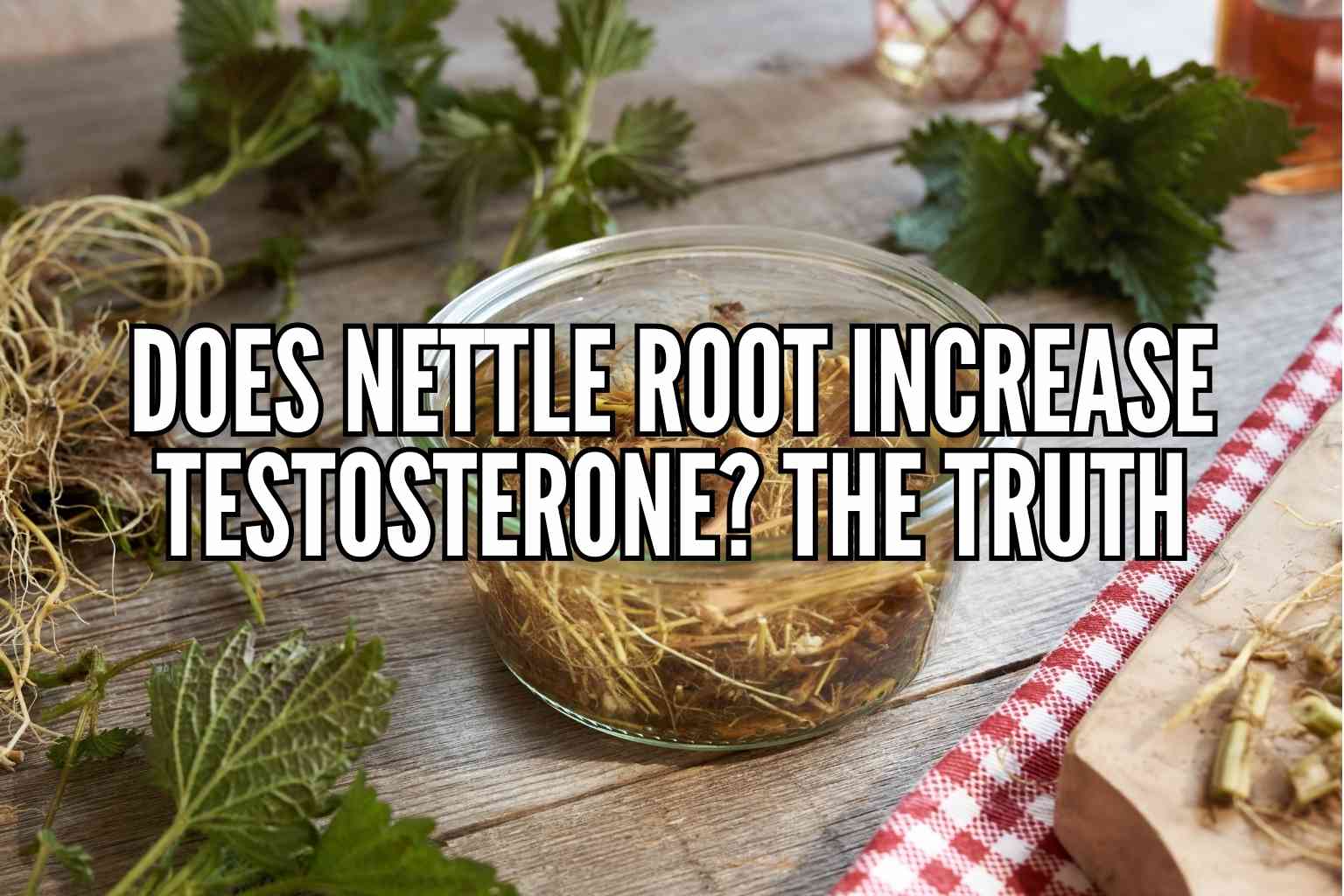
Does nettle root increase testosterone? Not directly — and that distinction is the most important thing to understand before evaluating this ingredient. Nettle root does not stimulate testosterone production. What it does is reduce the binding activity of sex hormone-binding globulin (SHBG), a carrier protein that sequester testosterone in the bloodstream and renders it biologically inactive. Only free, unbound testosterone reaches androgen receptors and drives the effects most people associate with healthy hormonal function. By reducing SHBG’s grip, nettle root increases the bioavailable fraction of testosterone that already exists — without changing how much your body produces.
That mechanism is real, clinically documented, and worth understanding properly.
Does Nettle Root Increase Testosterone: What the Research Shows
The core evidence comes from two sources. A study published in Planta Medica confirmed that aqueous nettle root extract inhibited SHBG binding activity by up to 67% in isolated human protein assays — a well-replicated finding from in vitro research using actual human SHBG. Two double-blind intervention studies using nettle root extract at 1,200 mg daily documented a 10% increase in measured testosterone alongside decreased SHBG binding activity in participants.

These are not dramatic total-testosterone elevation numbers — because that is not the mechanism. A man can have total testosterone “within normal range” on a standard blood panel and still experience every symptom of low hormonal function: persistent fatigue, reduced libido, slower recovery, and declining mental sharpness. The explanation is SHBG. When SHBG levels are elevated, as they typically are in men over 45, the biologically active fraction shrinks even when the total number stays stable.
So when someone asks does nettle root increase testosterone, the more useful answer is: it increases the fraction that does something. That shift matters most for men whose symptoms are driven by high SHBG rather than genuinely low total production.
For the complete evidence profile on nettle root across all its documented effects, read our nettle root benefits guide.
Factors That Affect How Much Difference You Will Notice
Your baseline SHBG level — Men with clinically elevated SHBG experience the most pronounced benefit from SHBG-binding supplementation. Men with already-low SHBG and genuinely low total testosterone production are better candidates for different interventions.
Extract standardization — The SHBG-binding activity of nettle root is driven by its lignan content — specifically secoisolariciresinol and related compounds. These are concentrated in standardized root extracts (DER 7–14:1), not in raw root powder. Products without a documented extraction ratio are unlikely to deliver the lignan concentrations needed to meaningfully affect SHBG binding.
Measurement method — Standard testosterone blood tests measure total testosterone, not free testosterone or SHBG. If you want to detect the shift that nettle root produces, you need a free testosterone panel or an SHBG-specific test — not the standard assay most physicians order by default.
Time on supplementation — The double-blind hormonal studies observed measurable shifts at four to six weeks. Subjective changes in energy and libido follow the biochemical change by an additional two to four weeks.
What To Look For in a Supplement
To access the SHBG-binding mechanism documented in research, the product needs to deliver the specific compounds responsible: lignans from standardized nettle root extract. Look for a DER 7–14:1 extraction specification on the label. If the formula also includes Tongkat Ali — which targets SHBG through a complementary but distinct pathway — the two compounds may produce additive effects on free testosterone availability. Formulas that combine both herbs address more of the SHBG picture than nettle root alone.
ProstaVive combines standardized nettle root extract with Tongkat Ali and additional men’s health ingredients in a formula designed around exactly this multi-pathway hormonal logic. For a detailed look at how the stack is built and who it fits best, read the full review of ProstaVive.

Bottom Line
Does nettle root increase testosterone? In total production terms, no. In bioavailable terms, the evidence says it can — by reducing SHBG’s ability to sequester the testosterone already circulating. The Planta Medica data showing up to 67% inhibition of SHBG binding is the most cited mechanistic finding, and the double-blind intervention studies confirm that the shift is detectable in human subjects. Men with high SHBG and hormonal shift symptoms, but with total testosterone still within range, are the best candidates for noticing a meaningful difference.
For the full picture on nettle root — mechanisms, dosage, safety, and clinical timelines — visit our nettle root benefits post.
Looking for more answers about nettle root? You might also find these useful:
— How long does nettle root take to work — including the specific timeline for the SHBG and free testosterone shift
— Nettle root vs saw palmetto for prostate: which one actually works better — how SHBG binding fits into the broader hormonal and prostate picture
Disclaimer: This article is for informational and educational purposes only and does not constitute medical advice. Individual results vary. Before starting any supplement, consult your physician — particularly if you are pregnant, breastfeeding, taking prescription medications, or managing a diagnosed health condition. These statements have not been evaluated by the Food and Drug Administration.