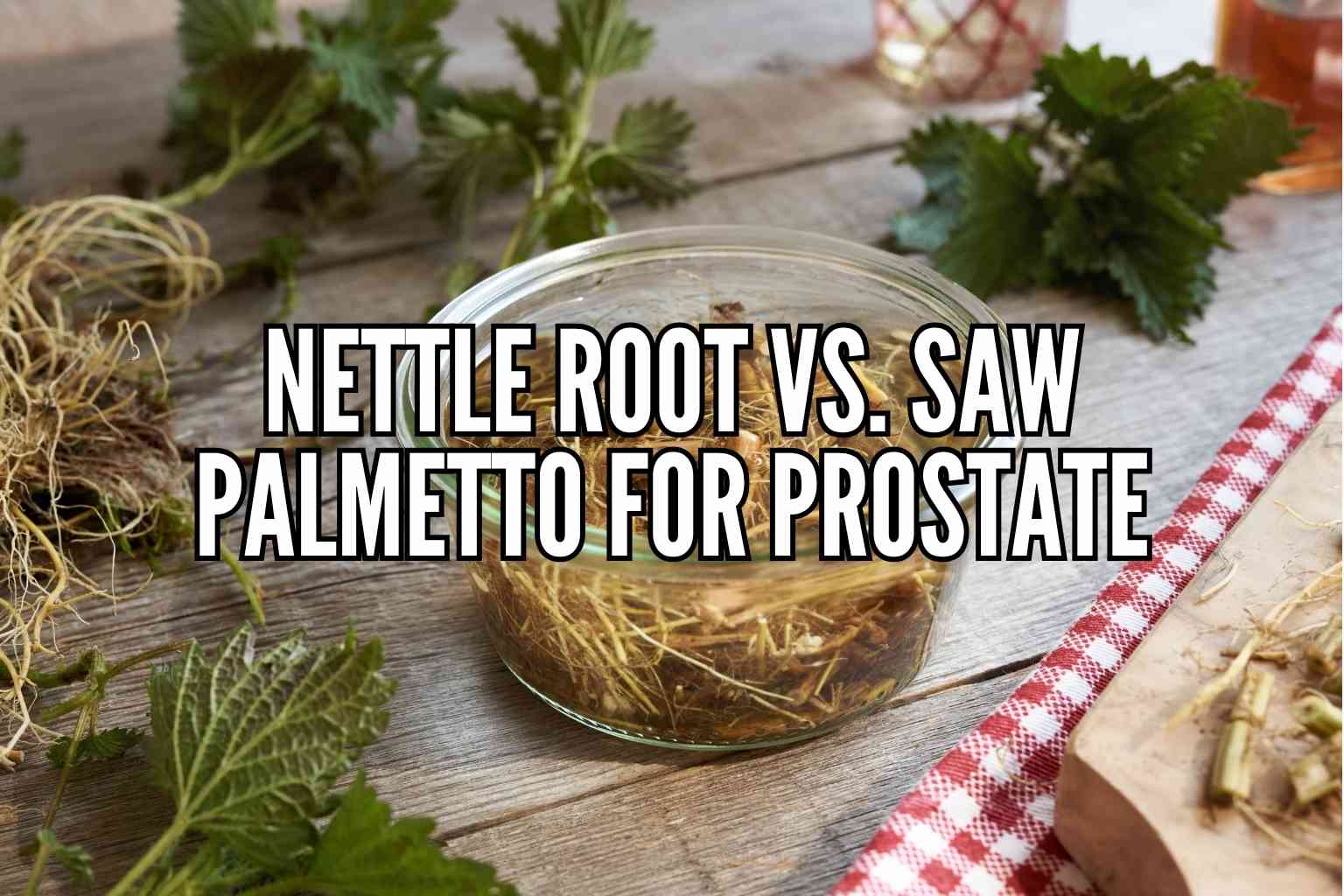
Comparing nettle root vs saw palmetto for prostate health comes down to mechanism. Saw palmetto is a more potent 5-alpha reductase inhibitor — it reduces DHT production directly in prostate tissue. Nettle root brings a different layer: SHBG-binding activity, aromatase inhibition, and anti-proliferative effects through its UDA lectin compounds. Neither herb clearly outperforms the other when used in isolation. The most consistent clinical evidence supports using both in combination — and a randomized, multicenter trial confirmed that the two together produced BPH symptom improvements comparable to finasteride, with fewer sexual side effects.
That finding should frame how you think about choosing between them.
Nettle Root vs Saw Palmetto for Prostate: What the Research Shows
Saw palmetto (Serenoa repens) has the larger body of clinical research behind it for BPH specifically. Its 5-alpha reductase inhibition reduces dihydrotestosterone in prostate tissue — the same mechanism targeted by finasteride. Multiple meta-analyses confirm consistent improvements in urinary flow, nocturia, and IPSS scores over 6 to 12 months.
Nettle root (Urtica dioica radix) is approved by the German Commission E for BPH treatment and covers ground that saw palmetto does not. It binds SHBG, reducing the hormonal drive on prostate tissue through a different pathway. Its UDA lectin compounds have demonstrated anti-proliferative effects on prostate cells in vitro. Its aromatase-inhibiting activity also reduces estradiol production — a less-discussed factor in prostate enlargement in aging men.

The landmark study directly examining nettle root vs saw palmetto for prostate outcomes used a fixed combination — 120 mg nettle root extract plus 160 mg saw palmetto extract, twice daily — and found symptom relief comparable to finasteride over 24 weeks. Neither herb alone produced equivalent evidence in head-to-head comparisons with pharmaceutical treatments.
For a full breakdown of how nettle root works across all its documented applications, visit our nettle root benefits guide.
Factors That Affect Results With Either Herb
Extraction quality — For saw palmetto, a liposterolic extract standardized to 85–95% fatty acids is the clinical reference. For nettle root, look for DER 7–14:1 with a documented solvent and lignan content. Raw powder at the same milligram count is not equivalent.
Combination vs. standalone — The evidence is stronger for the combination than for either ingredient alone. Purchasing two separate supplements does not guarantee the ratio or extract quality used in the clinical trials.
Time to effect — Significant improvements in BPH symptoms appeared at 6 to 8 weeks in clinical trials, with continued accumulation through 6 months. Men who stop at 3 to 4 weeks are exiting before the evidence-supported evaluation window.
Severity at baseline — Men with more pronounced urinary symptoms at the start of treatment tended to show greater measurable improvement in the combination trials.
What To Look For in a Supplement
Three criteria separate well-formulated products from label noise in this category. First, both herbs should be present in a single formula at research-aligned doses — saw palmetto at approximately 160 mg liposterolic extract and nettle root at 120–300 mg standardized extract, dosed twice daily. Second, the extraction ratio should be stated on the label, not just a raw milligram count. Third, complementary ingredients that support the hormonal environment — such as zinc or vitamin D — add meaningful context to the formula’s overall coherence.
ProstaVive is a men’s wellness formula that combines nettle root and saw palmetto within a broader stack targeting urinary comfort, SHBG modulation, and daily energy. For a detailed look at its formulation and who it makes the most practical sense for, read the full review of ProstaVive.

Bottom Line
The nettle root vs saw palmetto for prostate comparison is most useful when it leads to the right conclusion: these herbs work best together, not as alternatives to each other. Saw palmetto handles DHT through 5-AR inhibition; nettle root contributes SHBG binding, aromatase inhibition, and lectin-mediated anti-proliferative activity. The clinical evidence for the combination is the strongest in this herbal category — and that should guide product selection.
For the complete picture on how nettle root works, visit the nettle root benefits post.
Looking for more answers about nettle root? You might also find these useful:
— How long does nettle root take to work for BPH and hormonal symptoms — timelines by health goal, based on clinical trial data
— Nettle root dosage for BPH: what clinical trials actually used — extraction ratios, doses, and what matters more than the milligram count
Disclaimer: This article is for informational and educational purposes only and does not constitute medical advice. Individual results vary. Before starting any supplement, consult your physician — particularly if you are pregnant, breastfeeding, taking prescription medications, or managing a diagnosed health condition. These statements have not been evaluated by the Food and Drug Administration.