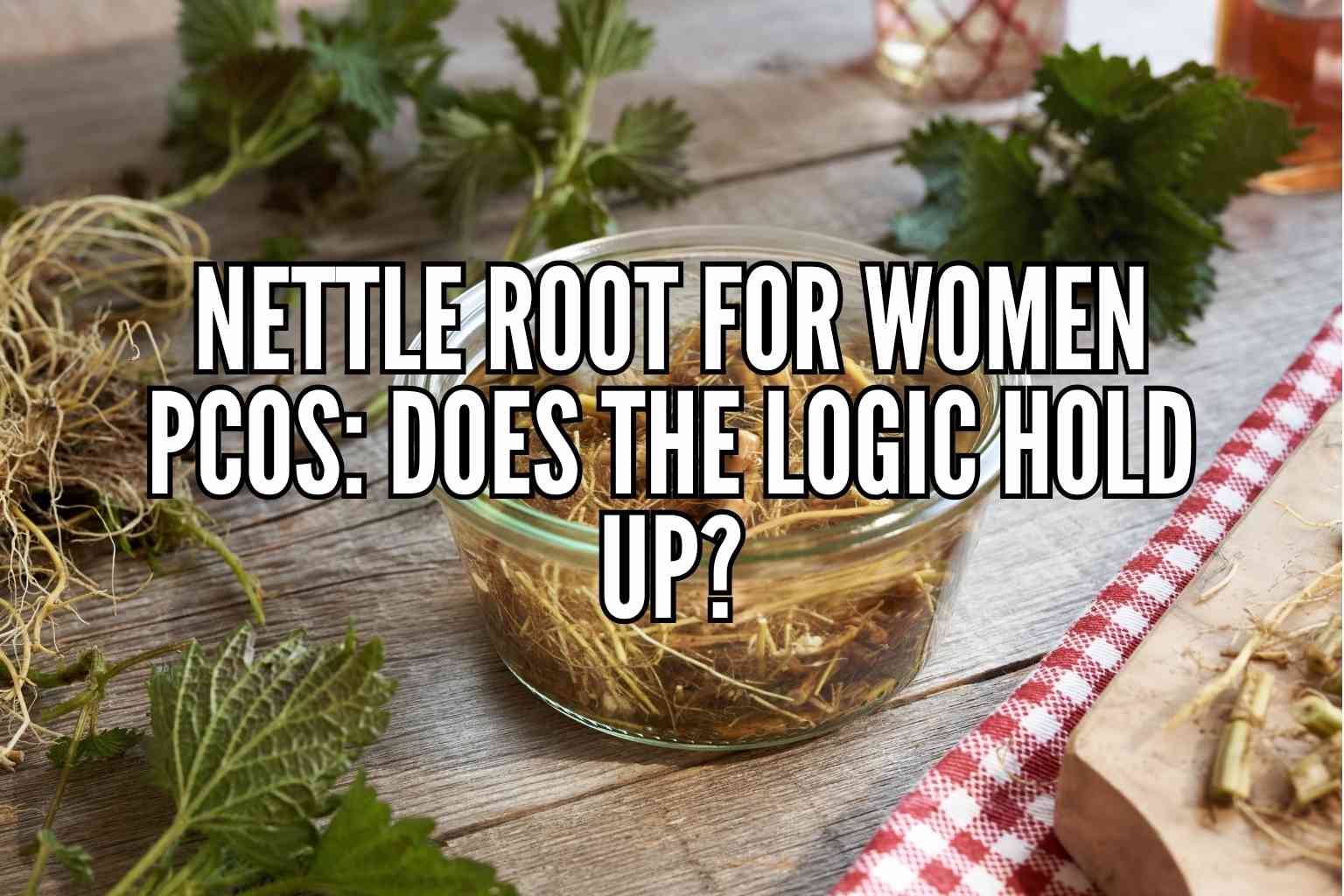
Nettle root for women PCOS contexts has a plausible hormonal rationale — but it requires precise framing. PCOS involves hyperandrogenism: elevated free androgens, often compounded by abnormally low SHBG, which allows excess testosterone and DHT to circulate unbound and drive symptoms like acne, hirsutism, scalp thinning, and cycle irregularities. Nettle root’s lignans bind SHBG competitively, and its compounds inhibit both aromatase and 5-alpha reductase — mechanisms directly relevant to androgen modulation. The evidence base is primarily mechanistic and practitioner-observed, not large-scale RCT data in PCOS populations. Women with confirmed hyperandrogenism exploring this ingredient should work with a clinician who can monitor hormone levels, not self-dose from general supplement information.
Nettle Root for Women PCOS: What the Research Shows
The PCOS connection rests on the same biological pathways that make nettle root studied for men’s hormonal health — applied in a different hormonal direction.
In men with declining vitality, elevated SHBG sequesters too much testosterone, reducing the bioavailable fraction. In women with PCOS, the problem is often the opposite: SHBG is abnormally low, leaving excess free androgens — testosterone and DHT — circulating without the buffering effect that adequate SHBG normally provides.
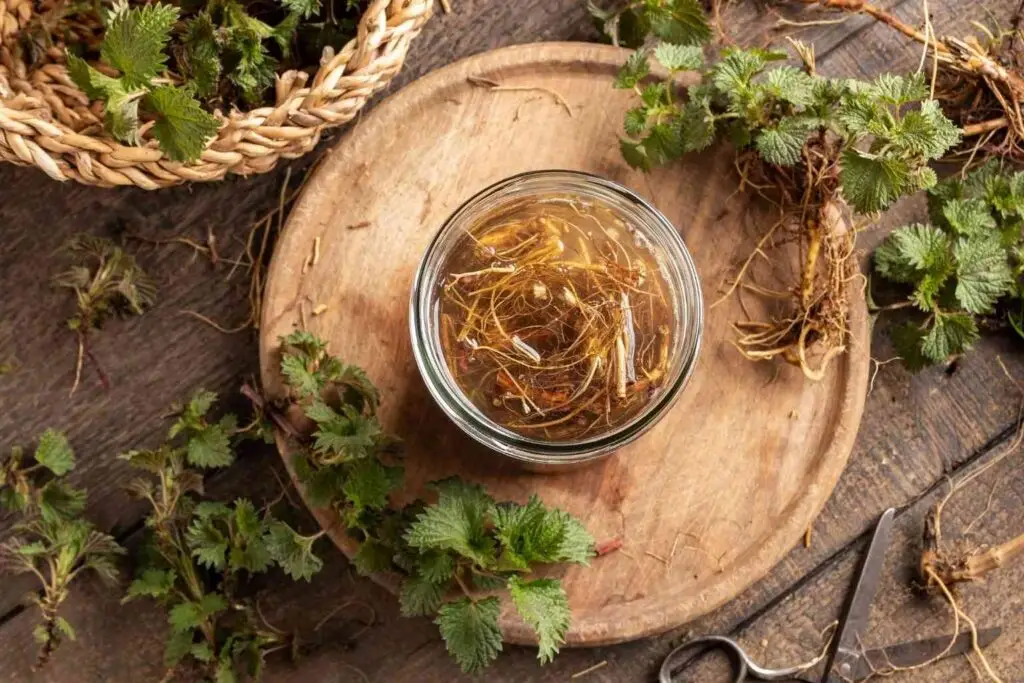
Nettle root’s lignan compounds bind SHBG competitively. In women with confirmed low SHBG and elevated free androgens, this binding activity may help moderate — not eliminate — androgen exposure at the receptor level. Its 5-alpha reductase inhibition reduces testosterone-to-DHT conversion, directly addressing the androgen most responsible for acne and androgenetic hair thinning. Some integrative practitioners incorporate nettle root into PCOS protocols for exactly these reasons, alongside inositol and other evidence-supported interventions.
No large-scale randomized controlled trial has tested nettle root for women PCOS management specifically. The evidence is mechanistic and observational. That does not make the application irrational — but realistic expectations and practitioner involvement are essential, not optional.
For the full clinical profile of this ingredient across all its documented applications, visit our nettle root benefits guide.
Factors That Determine Whether This Approach Makes Sense
Lab-confirmed hormonal picture — Nettle root is most logically relevant in PCOS cases where both elevated free androgens and low SHBG are confirmed on bloodwork. Women with PCOS but normal or elevated SHBG have a weaker hormonal rationale for this specific intervention.
Root vs. leaf — The SHBG-binding lignans and 5-AR inhibiting compounds are concentrated in the root — Urtica dioica radix. Products labeled “stinging nettle” without specifying the plant part may contain leaf only, which acts through completely different mechanisms and would not produce the hormonal effects described here.
Concurrent medications — Women on oral contraceptives, metformin, or spironolactone for PCOS should discuss any herbal addition with their physician. Mechanistic overlap in hormonal and glucose pathways warrants monitoring when layering interventions.
Pregnancy — Nettle root is contraindicated during pregnancy without exception. Traditional use of nettle to stimulate uterine activity, combined with its hormonal activity, makes this a firm precaution regardless of any other benefit profile.
What To Look For in a Supplement
Three criteria apply specifically to nettle root for women PCOS contexts. First, confirm the product specifies Urtica dioica radix — root, not leaf or aerial parts. Second, look for a stated extraction ratio of DER 7–14:1, which ensures the lignan concentration relevant to SHBG binding is present at a meaningful level. Third, since all major clinical studies on nettle root were conducted in men, dosage translation to female physiology requires individualized guidance from a practitioner — not direct application of male-study parameters.
Most published research on nettle root was conducted in male populations, and formulas currently on the market reflect that — they are built around prostate and male hormonal health. For women exploring this ingredient for PCOS or hormonal support, the most useful next step is understanding the full evidence base before making any supplementation decision. Our nettle root benefits guide covers the complete mechanisms, dosage considerations, and who the ingredient is — and is not — appropriate for.
Bottom Line
Nettle root for women PCOS support is mechanistically plausible — SHBG binding and 5-alpha reductase inhibition both address aspects of androgen excess that drive core PCOS symptoms. The gap is direct clinical evidence in this specific population. Women with confirmed elevated free androgens and low SHBG have the most coherent case for exploring this ingredient, under practitioner supervision. The hormonal logic holds up; the population-specific RCT data does not yet exist to confirm it clinically.
For everything on how nettle root works, who benefits most, and what the evidence actually supports, visit our nettle root benefits post.
Looking for more answers about nettle root? You might also find these useful:
— Does nettle root increase testosterone — the SHBG mechanism explained in full, which also underlies the PCOS hormonal application
— How long does nettle root take to work — what realistic timelines look like when using nettle root for hormonal endpoints
Disclaimer: This article is for informational and educational purposes only and does not constitute medical advice. Individual results vary. Before starting any supplement, consult your physician — particularly if you are pregnant, breastfeeding, taking prescription medications, or managing a diagnosed health condition. These statements have not been evaluated by the Food and Drug Administration.