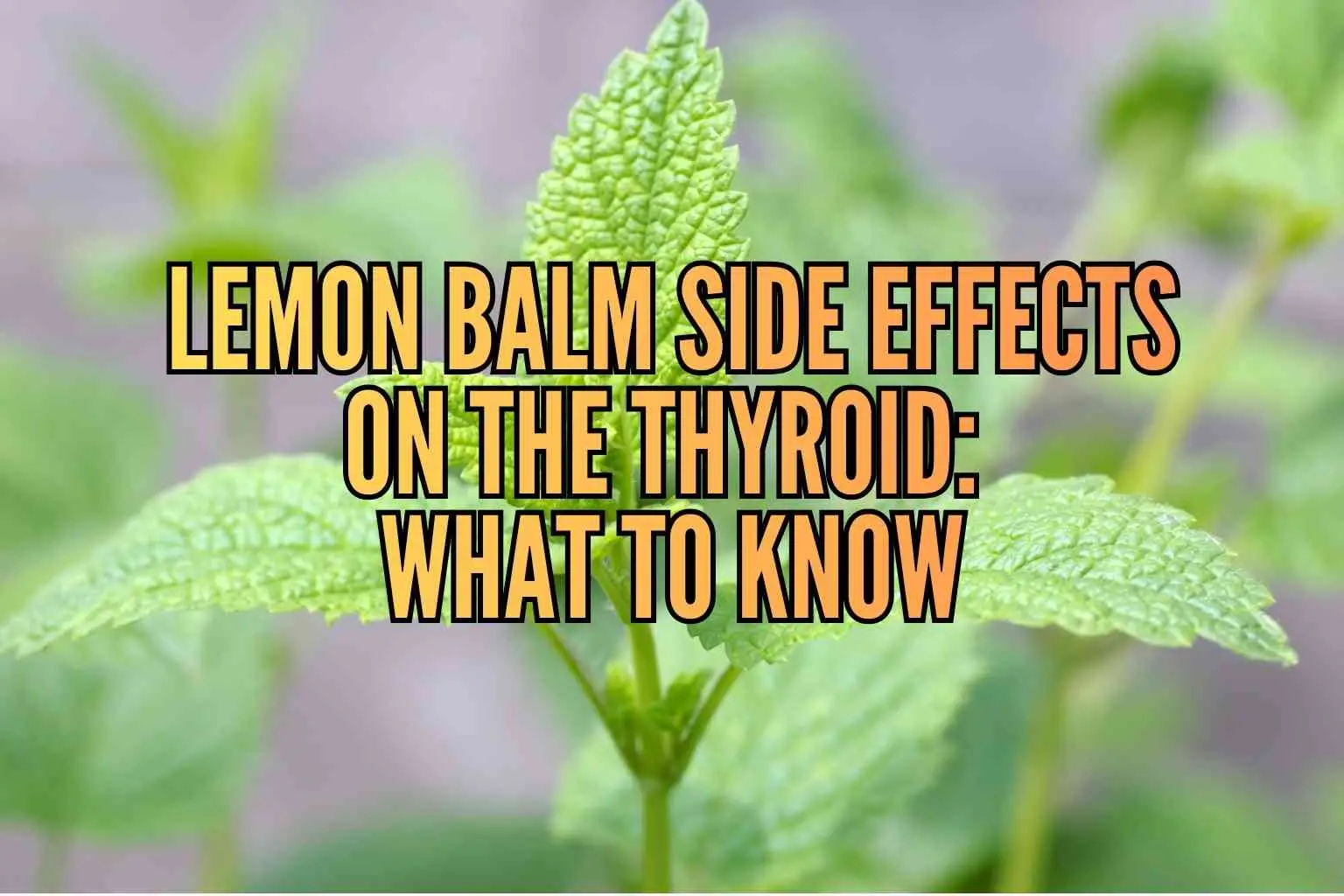
The concern about lemon balm side effects on thyroid function is pharmacologically grounded — but it applies to a specific population, not to everyone who takes the herb. Research using animal models has shown that Melissa officinalis extract can inhibit thyroid-stimulating hormone (TSH) receptor binding, reducing the thyroid gland’s responsiveness to its primary stimulating signal. For healthy adults without thyroid conditions, this effect has not produced clinically meaningful disruption at standard supplemental doses. For people taking thyroid hormone replacement — levothyroxine being the most common — the interaction deserves a direct conversation with a prescribing physician before starting.
Lemon Balm Side Effects on Thyroid: What the Research Shows
The evidence behind lemon balm side effects on thyroid tissue comes primarily from animal pharmacology. Studies have demonstrated that Melissa officinalis extract binds to TSH receptor sites competitively, partially blocking the signal that instructs the thyroid to produce hormones. Separate animal studies documented changes in thyroid tissue morphology with high-dose chronic administration — findings that informed the caution now present in several clinical pharmacology references.
The limitation of this evidence is important to state clearly: controlled human trials specifically examining lemon balm’s thyroid effects at supplemental doses do not yet exist. The animal data establishes biological plausibility for the interaction — it is not proof of clinically significant disruption in healthy humans at standard doses. Extrapolating animal pharmacology directly to human supplementation requires caution in both directions: neither dismissing the concern entirely nor overstating it as a universal contraindication.
What the evidence does support is a targeted precaution. People whose thyroid function is already medically managed — through replacement hormones or suppressive therapy — are operating with a narrower margin. Any compound that interferes with TSH receptor dynamics, even modestly, can complicate dose calibration in this population. That is a real clinical consideration, not an overcautious disclaimer.
For full context on lemon balm’s broader safety profile, mechanisms, and drug interactions beyond the thyroid, the complete lemon balm benefits guide covers the evidence in detail.
Factors That Determine Your Actual Risk Level
Thyroid status. Healthy adults with no diagnosed thyroid condition and no thyroid medication carry a low practical risk from standard lemon balm doses. The TSH inhibition documented in animal models has not produced symptomatic thyroid disruption in otherwise healthy supplementation contexts. The concern is most relevant for people already in medical thyroid management.
Dose and duration. The animal studies showing morphological thyroid changes used high doses over extended periods — not the 300–600mg range used in human anxiety and sleep trials. Short-term use at evidence-based doses represents a meaningfully different exposure profile than the chronic high-dose animal protocols.
Concurrent medications. The interaction with levothyroxine is the most clinically significant scenario. Thyroid replacement doses are calibrated to TSH feedback — anything that blunts TSH receptor sensitivity can make a previously stable prescription produce unexpected results. This is the case where medical consultation is not optional.
Monitoring. For people with thyroid conditions who choose to use lemon balm with physician awareness, periodic TSH monitoring provides an objective safety check that removes the guesswork.
What to Look For Before Starting
For anyone with thyroid-related concerns, the supplement evaluation criteria shift away from efficacy markers and toward risk mitigation:
- Dose transparency on the label — avoid proprietary blends that obscure how much lemon balm is actually present per serving. Knowing the exact dose is the baseline requirement for any meaningful risk assessment.
- Standardization disclosure — products that specify rosmarinic acid content allow for more accurate comparison with the doses studied in the pharmacological literature.
- Medical clearance before starting — not a marketing disclaimer, but a practical requirement for anyone on thyroid hormone replacement or under active thyroid monitoring. This conversation takes minutes and removes the primary risk entirely.
Bottom Line
Lemon balm side effects on thyroid function are real in animal models — specifically via TSH receptor inhibition — but the evidence does not support treating this as a universal contraindication for healthy adults. The population that warrants genuine caution is people taking thyroid hormone replacement or under active thyroid disease management, where even modest interference with TSH dynamics can affect medication calibration. For this group, physician consultation before starting is the appropriate step. For healthy adults without thyroid conditions, standard doses of lemon balm have not demonstrated clinically meaningful thyroid disruption in the available evidence.
For a complete overview of lemon balm’s safety profile, interactions, and evidence-based uses, visit the full post on lemon balm benefits.

Looking for more answers about lemon balm? You might also find these useful:
— Lemon Balm Dosage for Anxiety: What Clinical Trials Actually Used
— How Long Does Lemon Balm Take to Work? Timelines by Health Goal
Disclaimer: This article is for informational and educational purposes only and does not constitute medical advice. Results vary by individual. The information presented here is based on publicly available research and is not intended to diagnose, treat, cure, or prevent any condition. Pregnant or breastfeeding individuals, people taking prescription medications, and those with diagnosed health conditions should consult a qualified healthcare provider before starting any new supplement. These statements have not been evaluated by the Food and Drug Administration.