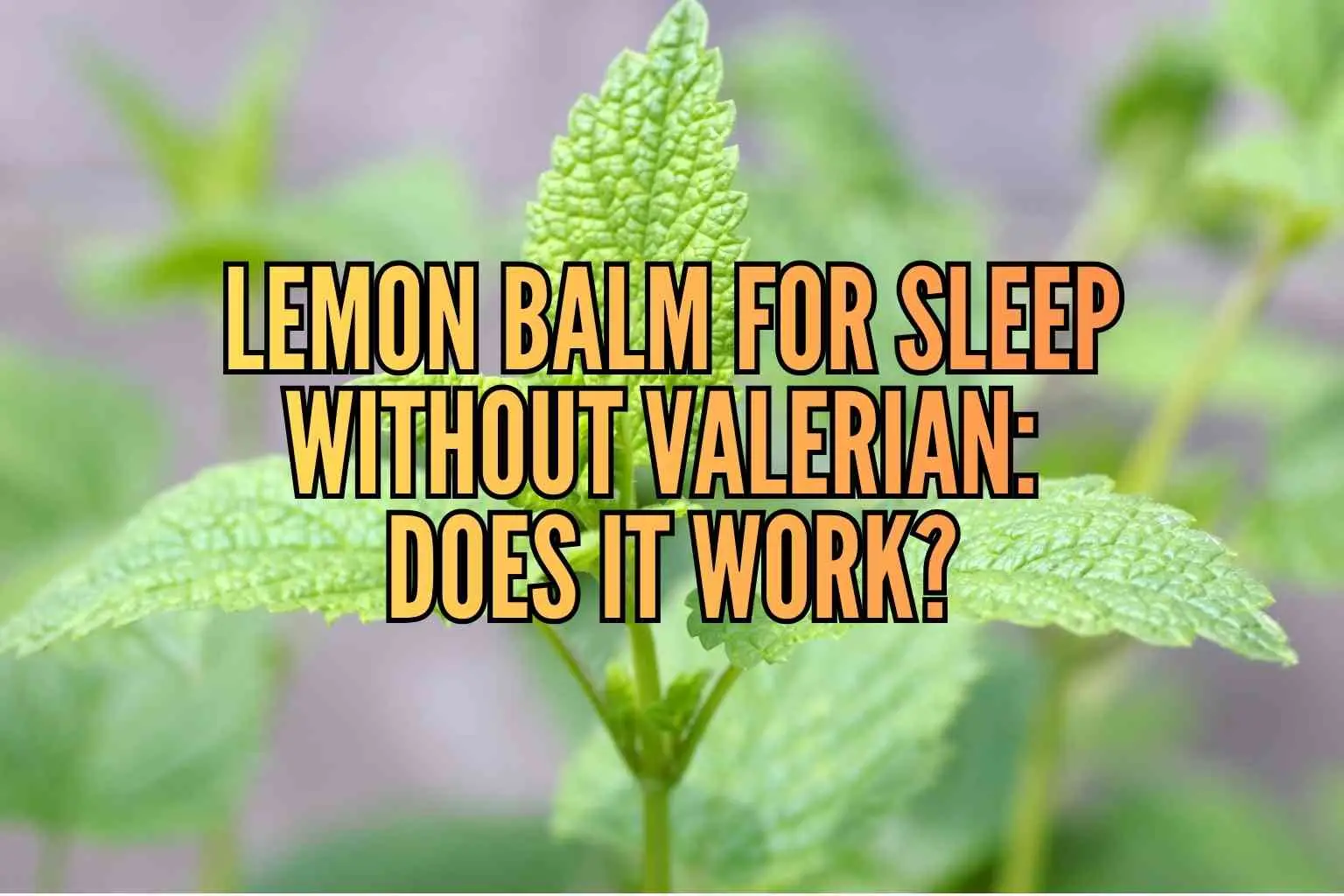
Lemon balm for sleep without valerian can work — but whether it’s enough depends on the type of sleep difficulty you’re dealing with. For adults whose primary problem is an overactive mind at bedtime, racing thoughts, or stress-driven sleep-onset delay, lemon balm alone at an appropriate dose has clinical support. For more significant insomnia — fragmented sleep, frequent waking, or early-morning arousal — the evidence consistently favors the combination of both herbs over either one in isolation.
The distinction matters because choosing the wrong protocol leads to premature abandonment of something that may actually work — just not for that specific pattern.
Lemon Balm for Sleep Without Valerian: What the Research Shows
The sleep evidence for lemon balm for sleep without valerian is more nuanced than most content suggests.

A six-week trial published in Phytomedicine evaluated standardized lemon balm extract in adults with mild-to-moderate sleep complaints and found significant improvements in sleep quality scores and next-day functioning compared to placebo — with the treatment group reporting measurably better rest at weeks two and three. This trial used lemon balm as a standalone intervention, which confirms the herb has independent sleep-relevant activity.
The mechanism behind this effect is rosmarinic acid’s inhibition of GABA transaminase — slowing the enzymatic breakdown of GABA at neural synapses and extending the inhibitory signal that allows the brain to decelerate toward sleep. This is a modulatory effect, not a sedative one. It works most reliably when the obstacle to sleep is neurological activation rather than a deeper circadian or structural problem.
Where the standalone case weakens is in populations with more severe sleep difficulty. Multiple well-designed trials using lemon balm and valerian in combination consistently outperform single-herb protocols — because valerian acts directly at GABA-A receptors while lemon balm slows upstream GABA degradation. The two mechanisms reinforce each other in ways neither achieves alone.
For a complete breakdown of how lemon balm works across sleep, anxiety, and cognition, the full lemon balm benefits guide covers the clinical evidence in detail.
Factors That Determine Whether Solo Use Is Enough
Your sleep pattern. Difficulty falling asleep due to mental activation is the profile where lemon balm for sleep without valerian performs best. Fragmented sleep, waking at 2–3am, or early-morning arousal suggests a different mechanism is at play — and the standalone protocol is less likely to address it adequately.
Dose. The standalone sleep evidence used doses at or above 600mg of standardized extract. Products delivering 100–200mg as part of a multi-ingredient blend will not replicate these outcomes. Dose matters more than brand for this application.
Consistency. A single bedtime dose produces modest acute effects. The meaningful sleep benefits documented in trials emerged after two to three weeks of daily use — the cumulative GABAergic modulation builds over time, not overnight.
Valerian sensitivity. For people who experience morning grogginess or a heavy, over-sedated quality with valerian — a legitimate response at higher doses — lemon balm alone is a reasonable first protocol before introducing a combination.
What to Look For If You’re Using Lemon Balm Alone for Sleep
If valerian is not part of the plan, the supplement selection criteria shift specifically toward compensating for the absence of direct GABA-A receptor activity:
- Higher standalone dose — look for products delivering at least 600mg per serving, not a token inclusion in a proprietary blend. This is the threshold where the solo sleep evidence is clearest.
- Standardized to rosmarinic acid — the active compound driving GABA-T inhibition. Without standardization, the dose is pharmacologically unpredictable.
- No added stimulants or unnecessary actives — some multi-herb sleep formulas include ingredients that partially counteract lemon balm’s calming mechanism. A clean, focused formula matters when using the herb as the primary active.
Bottom Line
Lemon balm for sleep without valerian is a legitimate protocol for adults whose sleep difficulty is primarily driven by mental overactivation at bedtime — but it requires the right dose, a standardized extract, and consistent use over at least two to three weeks. For more complex insomnia patterns involving sleep fragmentation or frequent waking, the combination with valerian remains better supported by the available evidence. Start with the solo protocol if valerian sensitivity is a concern, and reassess after three weeks.
For the complete picture on lemon balm’s sleep mechanisms, dosage guidance, and how it compares to other calming herbs, visit the full post on lemon balm benefits.

Looking for more answers about lemon balm? You might also find these useful:
— How Long Does Lemon Balm Take to Work? Timelines by Health Goal
— Lemon Balm Benefits for Women Over 50: Sleep, Cortisol, and Hormonal Calm
Disclaimer: This article is for informational and educational purposes only and does not constitute medical advice. Results vary by individual. The information presented here is based on publicly available research and is not intended to diagnose, treat, cure, or prevent any condition. Pregnant or breastfeeding individuals, people taking prescription medications, and those with diagnosed health conditions should consult a qualified healthcare provider before starting any new supplement. These statements have not been evaluated by the Food and Drug Administration.