

Most conversations about natural sleep and stress support skip past GABA benefits entirely, going straight to melatonin or ashwagandha. That gap matters — because GABA is not a supporting player in how the brain manages calm. It is the lead. Gamma-aminobutyric acid is the most abundant inhibitory neurotransmitter in the central nervous system, and the GABA benefits that flow from that role are wide-ranging: from how quickly you fall asleep, to how your brain handles stress, to how well your nervous system recovers between hard days. Without adequate GABA activity, the gap between winding down and lying awake with a racing mind gets a lot harder to close.
There is also a layer of genuine scientific complexity embedded in this topic that most GABA benefits guides handle poorly. The question of whether oral GABA can actually reach the brain — crossing the blood-brain barrier to do what it does endogenously — has been debated since the 1950s, and the honest answer is more nuanced than either side usually admits. This post covers the full picture: what GABA is, how it works at the receptor level, what the clinical research shows benefit by benefit, where the evidence is solid and where it is still developing, and who is most likely to see meaningful results from adding it to a daily routine.
What Is GABA? Your Brain’s Primary Inhibitory Neurotransmitter
Gamma-aminobutyric acid — GABA — is a four-carbon amino acid synthesized in the brain from glutamate, its chemical counterpart and functional opposite. Where glutamate excites neurons and drives the brain toward activity, GABA inhibits them, pulling neural firing back toward a stable baseline. The brain depends on both in precise ratio. When excitation consistently outpaces inhibition, the result is anxiety, insomnia, muscle tension, and in more serious cases, seizures.

GABA works by binding to two receptor families — GABA-A and GABA-B — distributed across the brain and spinal cord. GABA-A receptors are ion channels: when GABA binds, they open and allow chloride ions into the neuron, making it significantly harder for that cell to fire. GABA-B receptors operate through a slower, second-messenger mechanism producing longer-lasting inhibitory effects. Both systems matter, but GABA-A is the one most relevant to supplements and most studied in the context of sleep and anxiety. It is also the receptor site where benzodiazepines — Valium, Xanax — exert their effects. Understanding the GABA benefits from supplementation is inseparable from understanding why those drugs work, and why they carry the risks they do.
The practical consequence is direct: a brain with low GABAergic tone — meaning reduced GABA activity across its inhibitory networks — will tend to run hot. Thoughts loop. Sleep onset takes longer. Stress responses fire more easily and resolve more slowly.
Gamma-Aminobutyric Acid: How a Four-Carbon Molecule Controls Brain Excitability
GABA is not structurally exotic. Its chemical architecture is simple — the same amino butyric acid backbone that appears in basic metabolic chemistry. What makes it biologically powerful is its distribution and receptor density. Roughly 30–40% of all neurons in the brain use GABA as their primary signaling molecule. That level of prevalence means GABA benefits are not limited to one pathway or one symptom cluster. GABA sets the inhibitory tone for the entire central nervous system.
The synthesis route also matters clinically. GABA is produced from glutamate via glutamic acid decarboxylase (GAD), an enzyme that requires vitamin B6 as a cofactor. Severe B6 deficiency can cause seizures in infants because the brain loses the ability to produce enough GABA. In adults, subclinical B6 insufficiency may contribute to reduced GABAergic tone without producing obvious neurological symptoms — a nutritional angle frequently overlooked in GABA benefits discussions.
One more structural point with practical implications: GABA does not exist only in the brain. The gut produces GABA too, primarily through bacteria including Lactobacillus and Bifidobacterium species. This gut-derived GABA connects to the brain via the gut-brain axis, a bidirectional communication channel running primarily through the vagus nerve. How much gut GABA contributes to central GABAergic tone is still being characterized — but the pathway is real, and it helps explain why fermented foods produce a documented calming effect that goes beyond nutrition alone.
PharmaGABA vs. Synthetic GABA: Why the Source Changes What You Feel
Walk into any supplement store and you will find dozens of GABA products. Most contain chemically synthesized GABA — manufactured in a lab and structurally identical to what the brain makes. That sounds sufficient. When you look at the published evidence on GABA benefits, the source distinction becomes harder to ignore.
PharmaGABA is a trademarked form produced through fermentation by Lactobacillus hilgardii, the same bacterial strain used in traditional Korean fermented foods. The fermentation process produces GABA in a form that, in several Japanese trials, showed measurable effects on EEG brain activity and self-reported relaxation that synthetic GABA at comparable doses did not consistently replicate.
The proposed reason involves gut-brain signaling. PharmaGABA, derived from a natural fermentation matrix, may interact with gut GABA receptors and vagal afferent fibers in ways that synthetic GABA does not. PharmaGABA also holds FDA GRAS designation at doses up to 750mg, and most published human studies documenting GABA benefits used this fermented form. When evaluating any GABA supplement, source is the first question worth asking.
Natural Food Sources of GABA
GABA is not widely present in conventional foods. Fresh fruits, vegetables, and most grains contain only trace amounts. The foods with the highest GABA concentrations fall into two categories: fermented foods and specific plants where GABA accumulates as a metabolic stress-response compound.
Fermented foods provide the most concentrated dietary pathway to GABA benefits. Kimchi, miso, tempeh, and natto have been analyzed for GABA content in food science studies, with miso in particular showing consistently elevated concentrations depending on fermentation duration. Kefir and some aged cheeses also contain GABA, though levels vary by culture and preparation.
Green, black, and oolong tea naturally contain GABA — which is part of why these teas produce a calming quality beyond their L-theanine content. Japanese researchers developed a processing method involving nitrogen-gas storage during leaf withering that significantly increases GABA concentrations in the final product. This “GABA tea” has been studied specifically for blood pressure and relaxation effects.
Among vegetables, spinach, broccoli, sweet potato, kale, and tomatoes contain meaningful amounts, particularly when fresh. Germinated brown rice — the base ingredient in Japanese GABA supplement products tested in clinical trials — produces elevated GABA during the sprouting process, as germination chemistry activates GABA synthesis in the grain.
The honest caveat: eating foods high in GABA or fermented foods that boost GABA will elevate gut GABA concentrations. Whether that translates to central nervous system GABA benefits depends on gut-brain axis signaling that is still being characterized. What is documented is that cultures with high fermented food consumption show lower population-level rates of certain anxiety-related conditions — a pattern worth noting, even without a fully resolved mechanism.
How Does GABA Work? 5 Mechanisms That Go Beyond “Just Relaxation”
The shorthand — “the relaxation neurotransmitter” — is accurate but reductive. It captures one output of GABA benefits while omitting most of the underlying machinery. Understanding how GABA actually works changes how you assess who benefits from supplementation and why certain clinical applications have stronger evidence than others.
GABA-A Receptor Activation is the fast-acting mechanism behind the most immediate GABA benefits. GABA binds to GABA-A receptors, opens chloride channels, and hyperpolarizes the neuron — making it significantly harder to fire. This is the mechanism behind sleep onset support, muscle relaxation, and acute anxiety reduction. It is also the mechanism benzodiazepines hijack, which is why they work rapidly and produce tolerance and dependence with chronic use.
HPA Axis Modulation is the stress-regulation layer of GABA benefits. The hypothalamic-pituitary-adrenal axis — the system that produces cortisol in response to perceived threat — contains GABAergic neurons that exert inhibitory control over corticotropin-releasing hormone (CRH) release. When GABAergic tone is high, CRH is suppressed, cortisol stays lower, and the physiological stress response is shorter and less intense. Low GABAergic tone leaves the HPA axis running with less inhibition — producing the chronic cortisol elevation linked to sleep disruption, abdominal fat accumulation, and immune suppression.
Glutamate-GABA Balance is the ratio that determines whether the brain tips toward overactivation or appropriate inhibition. Chronic stress, poor sleep, alcohol dependence, and nutritional deficiencies shift this balance toward glutamate dominance — a state of neural hyperexcitability that presents as anxiety, irritability, and fragmented sleep. Restoring balance is one of the central GABA benefits worth understanding before choosing a supplement.
Gut-Brain Axis Signaling gives dietary GABA more plausibility than the blood-brain barrier debate alone would suggest. Gut GABA — from fermented foods or oral supplements — activates enteric GABA receptors and sends signals to the brain via the vagus nerve without requiring direct BBB crossing. A 2022 clinical paper using low-dose natural GABA at 100mg/day showed sleep-onset improvements that likely involve this pathway.
GABAergic Tone and Sleep Architecture ties all GABA benefits together at the structural level. GABA does not just help you fall asleep — it helps structure the sleep you get. GABAergic activity in the ventrolateral preoptic nucleus (VLPO) of the hypothalamus is the primary switch mechanism transitioning the brain from wakefulness to sleep. Low GABAergic tone in this region is directly associated with fragmented sleep, early morning awakening, and the light, non-restorative rest that leaves people exhausted despite spending enough hours in bed.
GABA Benefits: What the Research Actually Shows
The GABA benefits documented in human research cover a wider range than most supplement discussions acknowledge. Evidence quality varies considerably from one application to the next — and calibrating assertiveness by evidence tier is more useful than treating all GABA benefits with uniform confidence or uniform skepticism.
1. GABA for Sleep: What Two Systematic Reviews Conclude
Among all studied GABA benefits, sleep support has the strongest and most consistent human evidence base.
A 2020 systematic review published in Frontiers in Neuroscience analyzed five human trials of oral GABA administration and found evidence supporting improvements in sleep latency and subjective sleep quality across studies. A 2022 randomized, double-blind, placebo-controlled trial tested 100mg of natural rice-germ GABA daily in adults with sleep-onset insomnia over four weeks. The GABA group showed significantly reduced sleep latency compared to placebo — one of the cleaner demonstrations of GABA benefits for sleep in recent clinical literature.
The GABA and L-theanine combination produces some of the strongest results. A study in Food Science & Biotechnology found the two compounds together decreased sleep latency by 20.7% and increased sleep duration by 87.3% compared to either compound alone in animal EEG models. These GABA benefits appear synergistic because GABA and L-theanine target different aspects of pre-sleep neural activation.
The honest qualifier: most human trials examining GABA benefits for sleep are small, and effect sizes are real but modest. GABA supplementation does not replicate the blunt sedative power of prescription sleep medications — which is arguably the point. These GABA benefits work with the brain’s own inhibitory system rather than overriding it.
2. GABA for Anxiety: The Inhibitory Neurotransmitter Under Chronic Stress
The GABA benefits most relevant to anxiety are grounded in neurobiological measurement, not just anecdote. Magnetic resonance spectroscopy studies — which measure GABA concentrations in living brain tissue — have documented consistently lower cortical GABA in people with generalized anxiety disorder, panic disorder, and PTSD compared to healthy controls.

A small 2006 human study found that participants taking a GABA supplement reported significantly higher relaxation scores during a stress-inducing task compared to placebo or L-theanine. Effects from these GABA benefits were detectable within one hour of ingestion. A 2025 study in npj Science of Food found long-term oral GABA mitigated anxiety-like behavior by modulating neuroinflammatory and complement pathways — a mechanistically detailed finding that extends the GABA benefits for anxiety beyond earlier behavioral studies.
For clinically significant anxiety disorders, these GABA benefits are not a replacement for evidence-based treatment. For acute situational stress and subclinical anxiety in otherwise healthy adults, the evidence is more consistent.
3. GABA and Stress: The Cortisol Connection Most Guides Miss
GABA benefits for stress go deeper than “feeling calmer.” The precise mechanism involves the HPA axis directly, and once you follow the biology, the connection between GABA and cortisol becomes physiologically direct.

GABAergic neurons in the hypothalamus inhibit CRH secretion. Less CRH means less ACTH from the pituitary, which means less cortisol from the adrenals. High GABAergic tone acts as a functional brake on the cortisol response. When that brake weakens under chronic stress — or is structurally compromised by low GABA levels — cortisol runs longer, recovery windows shrink, and the downstream effects accumulate without clear attribution. Understanding these GABA benefits through the HPA lens explains why chronic stress management and GABA support are mechanistically connected, not merely coincidentally associated. The direct human data on oral GABA and cortisol specifically is still developing, but the mechanistic case rests on well-characterized HPA biology.
4. GABA and Blood Pressure: A Benefit With a Surprising Research Trail
Among the less-expected GABA benefits is cardiovascular support — specifically blood pressure reduction — and this application has one of the longer research trails in the literature.
A 2003 study found that daily fermented milk containing GABA reduced blood pressure in participants with mildly elevated levels after two to four weeks. A 2009 study in Clinical and Experimental Hypertension using Chlorella-derived GABA at 10–20mg/day produced significant reductions in both systolic and diastolic blood pressure in hypertensive adults over 12 weeks. The proposed mechanism involves GABA receptors in the peripheral nervous system and direct relaxation of vascular smooth muscle.
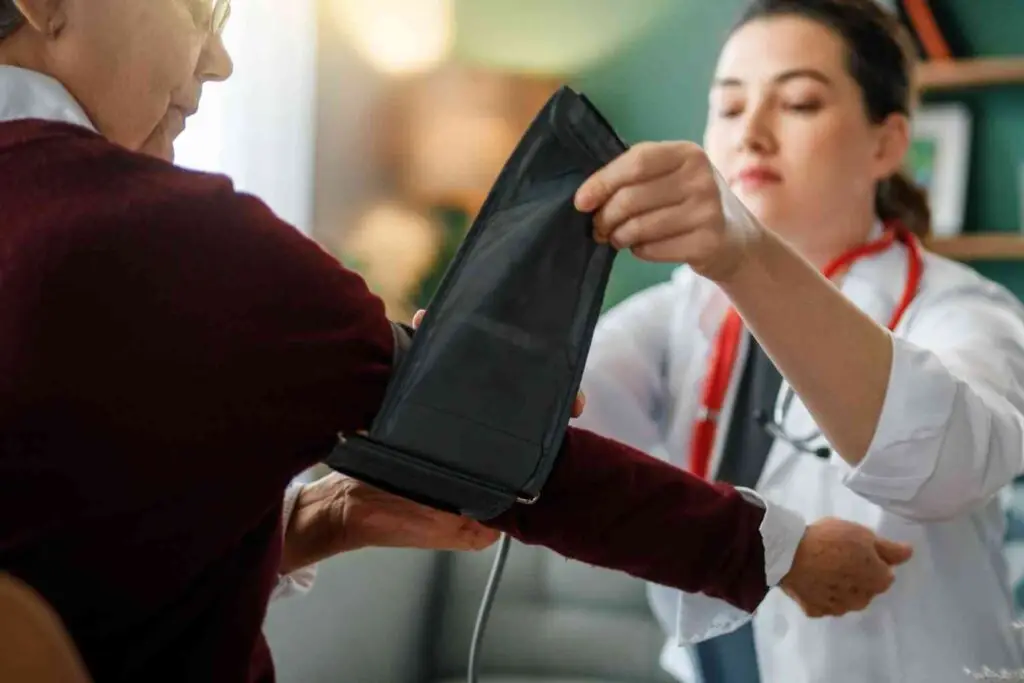
These GABA benefits apply most clearly to adults with mildly elevated blood pressure not yet on prescription medication. They also raise the most clinically significant safety consideration in GABA’s profile: anyone already taking antihypertensive medications should discuss GABA with their prescriber before starting, because additive blood pressure lowering is a real interaction risk.
5. GABA for Mood and Depression: What the Low-GABA Research Reveals
Spectroscopy studies have documented reduced occipital and prefrontal cortical GABA in people with major depressive disorder compared to healthy controls — a finding replicated across multiple independent cohorts. The GABA benefits relevant to mood are not speculative; they reflect documented differences in brain neurochemistry between depressed and healthy populations.
A 2004 study in American Journal of Psychiatry found that recovered depressed patients who had been off antidepressants for months still showed cortical GABA deficits compared to never-depressed controls. That persistence — in recovered patients, off medication — suggests low GABAergic tone may be a neurobiological trait, not just a transient symptom. A 2002 study in the same journal documented cortical GABA reductions during acute depressive episodes in treatment-naive patients.
These GABA benefits for mood are better understood as neurobiological context than as direct treatment evidence. GABA supplementation is not a standalone intervention for clinical depression. The data does support its relevance for people at the mild-to-moderate end of the mood spectrum looking for non-pharmaceutical support options.
6. GABA and Growth Hormone: What the Exercise Research Actually Found
This sits among the more surprising GABA benefits — because an inhibitory neurotransmitter increasing a repair and growth hormone looks paradoxical on the surface.
The explanation is in the pituitary. GABAergic activity in the hypothalamus suppresses somatostatin, which normally inhibits growth hormone (GH) secretion. More GABA → less somatostatin → more GH from the pituitary. A 2008 study in Medicine & Science in Sports & Exercise found that oral GABA at 3g increased resting GH levels by approximately 400% and post-exercise GH by 200% compared to placebo. These GABA benefits for GH are acute rather than sustained — the spike resolves within hours — and the dose used is substantially higher than sleep or anxiety protocols. Downstream body composition effects from this mechanism have not been consistently demonstrated in longer trials.
7. GABA and Focus: The Calm Attention Effect
GABA benefits for attention work through the opposite mechanism from stimulants. Rather than increasing arousal or dopamine, GABA reduces the background neural noise — the ruminative, anxious mental activity — that hijacks executive function and prevents sustained focus from holding.

A human study using 800mg oral GABA found improvements in attention-switching tasks compared to control conditions. The mechanism aligns with what practitioners call “focused calm.” A 2021 study, however, found that GABA alone did not consistently improve cognitive task-switching versus placebo. These GABA benefits for focus appear most likely in people whose attention difficulties are driven by anxiety and neural overactivation, rather than baseline low arousal. Promising, but not yet settled.
Does GABA Actually Reach Your Brain? The Blood-Brain Barrier Debate, Explained
This is the question that separates a rigorous GABA benefits discussion from a promotional one. The honest position: the picture is considerably more nuanced than “GABA cannot cross the BBB.”
The classic view, derived from studies in the 1950s through 1980s, held that GABA molecules are too polar to cross the blood-brain barrier via passive diffusion. That finding was replicated in multiple labs and shaped how GABA benefits from oral supplementation were discussed for decades. It is not entirely wrong — but it is incomplete.
More recent research has identified specific transporter proteins in the BBB — including the GAT (GABA transporter) family — that facilitate active transport of GABA across the barrier. Animal studies have confirmed that small but measurable amounts of orally administered GABA reach brain tissue via these transporters. The amounts are modest relative to endogenous production, which may explain why GABA benefits are real but not pharmacologically dramatic.
The gut-brain axis provides a second, arguably more important route. Gut GABA — whether from fermented foods or oral supplements — activates enteric GABA receptors and sends signals to the brain via the vagus nerve without requiring any BBB crossing. This pathway is increasingly viewed as the primary mechanism behind the behaviorally observed GABA benefits from oral supplementation. It also explains why PharmaGABA produces more consistent effects than synthetic GABA — fermented GABA interacts more robustly with gut-resident receptors and generates a stronger vagal signal.
The most direct human evidence comes from EEG studies using PharmaGABA. A series of Japanese trials documented measurable changes in alpha and beta wave ratios within 60 minutes of oral ingestion — a brain activity pattern associated with relaxation without sedation. These EEG-confirmed GABA benefits were not consistently replicated with synthetic GABA at comparable doses, supporting the hypothesis that source and route of action matter in ways that a simple molecular-equivalence argument misses.
The practical takeaway: oral GABA probably does not raise brain GABA dramatically via passive BBB crossing. But the GABA benefits documented in human studies are real — operating through transporter-mediated entry and gut-brain axis signaling that do not require the barrier to be fully permeable. That is mechanistically different from — and more honest than — both “it doesn’t work” and “it’s just like a natural benzodiazepine.”
Who Benefits Most From GABA Supplementation?
Not everyone needs GABA support. For people with robust GABAergic function and low chronic stress load, supplementation may produce little noticeable effect. The populations most likely to experience meaningful GABA benefits fall into recognizable profiles.
Adults dealing with stress-related sleep disruption represent the best-studied group for GABA benefits. Their sleep problems are driven by neural hyperactivation — difficulty turning off mental activity at bedtime, racing thoughts during the night, early morning waking without the ability to return to sleep. This profile is mechanistically distinct from sleep apnea, circadian misalignment, or chronic pain-driven insomnia, and it is precisely the profile where GABAergic inhibition addresses the root dysfunction.
People under chronic occupational or psychological stress who notice their recovery window shrinking — feeling perpetually switched-on even without an immediate stressor — are also strong candidates for GABA benefits. This profile frequently overlaps with the sleep group because HPA axis dysregulation produces both outcomes through the same mechanism.
Adults with mildly elevated blood pressure not yet on medication represent a third group, where the evidence is specific to fermented GABA sources at lower doses. And the 35–65 age range broadly defines a window where GABAergic tone naturally declines with aging and sleep architecture shifts toward lighter, more fragmented patterns.
GABA for Women After 50: Sleep, Menopause, and the Hormonal Link
Estrogen enhances GABA-A receptor sensitivity — meaning that when estrogen is high, endogenous GABA produces a stronger inhibitory signal. When estrogen drops during perimenopause and menopause, GABA-A receptor sensitivity decreases, and effective GABAergic tone falls even if GABA production stays constant. This is one underappreciated mechanism behind the sleep disruption, anxiety, and mood volatility many women experience during the menopausal transition.
Hot flashes and night sweats explain part of the picture. The functional reduction in GABA-A receptor sensitivity that comes directly from lower estrogen explains another part — quietly, without obvious attribution. A clinical trial currently registered on ClinicalTrials.gov is evaluating GABA supplementation specifically for climacteric symptoms including hot flashes, sleep disturbances, and mood swings. For women over 50 whose sleep quality has worsened alongside other menopausal changes, the estrogen-GABA receptor connection is worth understanding before defaulting to melatonin as the only natural option.
GABA in Modern Supplements
GABA benefits are increasingly well recognized in the supplement formulation space. The ingredient now appears in sleep formulas, stress-support products, and multi-mechanism combinations where its inhibitory-nervous-system role complements other active ingredients. How a formula integrates GABA — source, dose, surrounding ingredient logic — determines whether the inclusion is scientifically purposeful or merely decorative.
Audifort: When GABA Meets Hearing Support and Sleep Recovery
Audifort is a liquid daily supplement that includes GABA alongside Maca Root, Grape Seed Extract, Green Tea, Capsicum Annuum, and Gymnema Sylvestre. At first look, GABA benefits inside a hearing support product may seem unexpected. The mechanism behind the combination is more coherent than it appears.
Tinnitus — the persistent ringing or buzzing that affects an estimated 10–25% of adults according to the National Institute on Deafness and Other Communication Disorders — is increasingly understood as a problem of central neural hyperexcitability, not purely a peripheral ear malfunction. When hair cells in the inner ear are damaged, the auditory cortex generates compensatory neural noise. That compensation involves a documented shift in the excitatory-inhibitory balance in auditory processing areas — specifically, reduced GABAergic inhibition. Multiple animal and human studies have documented GABAergic deficits in the auditory cortex of tinnitus sufferers, making the GABA benefits from inhibitory support directly mechanistically relevant.
The intrusive perception of ringing also intensifies when cortical arousal is high. Stress and anxiety amplify the neural signal because they lower GABAergic tone systemically. Supporting that tone can reduce the amplification effect, even in cases where the peripheral cause of tinnitus cannot be fully resolved. Combined with the circulatory and antioxidant support from Grape Seed Extract and Green Tea, the formula targets both vascular and neural dimensions of auditory health in a way that reflects how tinnitus research now understands the condition.
For a detailed breakdown of the full Audifort formula, ingredient-by-ingredient analysis, and what realistic outcomes look like for different buyer profiles, read the full Audifort review here.

How Long Does GABA Take to Work? Timelines by Use Case
The timeline for GABA benefits varies considerably by application, and collapsing them into a single “takes 2–4 weeks” answer misses important nuance.
For acute stress and relaxation, EEG studies using PharmaGABA documented changes in alpha and beta wave ratios — the brain activity signature of relaxed alertness — within 60 minutes of a single oral dose. The GABA benefits for acute stress management can appear in the same session as the dose, particularly with fermented forms taken 30–60 minutes before a stressor.
For sleep latency improvements, consistent daily use across one to four weeks is the window where RCT-level evidence documented significant changes. A single pre-bed dose may help some people on night one, but the more robust GABA benefits for sleep in the clinical literature emerged after sustained supplementation.
For chronic stress and HPA axis regulation, the timeline extends further. Rebalancing cortisol patterns through GABAergic support is a gradual process — studies using GABA for blood pressure used 8–12 weeks before assessing primary outcomes. Anyone expecting a systemic shift in stress response should measure progress in weeks, not days.
Growth hormone GABA benefits documented in exercise studies are acute — peaking within an hour post-ingestion — and are not sustained across the day, which is why GH-focused protocols involve pre-workout dosing rather than daily supplementation for that purpose.
GABA Dosage, Timing, and Safety
Understanding the dosage context for GABA benefits matters more here than for most supplement ingredients, because the appropriate dose varies significantly by application — and using a sleep-protocol dose for attention purposes, or vice versa, will not produce the expected outcome.
GABA Dosage: What Clinical Studies Actually Used
For sleep and stress GABA benefits, the range most consistently used runs from 100 to 300mg daily. The 2022 RCT on sleep-onset insomnia used 100mg of natural GABA with significant results. Chlorella-derived GABA for blood pressure GABA benefits was studied at 10–20mg — a lower number reflecting higher bioavailability from that specific concentrated source, not a lower active dose. For attention and focus GABA benefits, 800mg was the dose showing cognitive-task improvements. For growth hormone, doses of 3,000–5,000mg were used in exercise research — a range well outside what is relevant to stress or sleep applications.
The best time to take a GABA supplement for sleep is 30–60 minutes before bed. For acute pre-event stress, the same window applies. For daytime cognitive support, morning or midday dosing avoids the carry-over drowsiness that higher evening doses can produce.
GABA Safety and Side Effects
GABA carries FDA GRAS designation, and PharmaGABA is specifically recognized as safe at doses up to 750mg. The most commonly reported side effects are mild and dose-dependent: tingling or flushing at higher doses, morning drowsiness from high nighttime doses, and occasional gastrointestinal discomfort.
Can you take GABA every night? Based on available evidence, short-term nightly use appears safe. There is no documented withdrawal syndrome or physiological dependence with GABA supplements comparable to benzodiazepines — the receptor-adaptation mechanism driving benzodiazepine dependence does not apply to supplemental GABA at typical doses. The GABA benefits from nightly use over extended periods outpace the formal evidence window, which extends to approximately one month of continuous use. Periodic reassessment of whether continued supplementation is needed is a reasonable practice.
Pregnancy and breastfeeding are a clear contraindication. GABA directly affects progesterone, prolactin, and growth hormone signaling — pathways critical during fetal development and lactation. GABA benefits do not apply in these contexts, and the supplement should not be used.
GABA Interactions and Precautions
Antihypertensive medications carry the most clinically significant interaction risk with GABA benefits programs. Additive blood pressure lowering is a real mechanism. Anyone managing hypertension pharmacologically should discuss GABA with their prescriber before starting.
CNS depressants — alcohol, benzodiazepines, barbiturates — may have their effects potentiated. The degree of interaction at typical supplement doses is likely small, but the mechanism makes caution appropriate for anyone using these substances regularly. Anticonvulsant medications like gabapentin and valproate work through GABAergic modulation, and adding GABA supplements to these regimens requires explicit medical guidance.
Frequently Asked Questions About GABA
Does GABA Cross the Blood-Brain Barrier?
Not efficiently via passive diffusion — but probably in small amounts via active transporter mechanisms, and more relevantly through gut-brain axis signaling that does not require BBB crossing. EEG studies provide the most direct human evidence for GABA benefits reaching the brain after oral dosing: PharmaGABA produced measurable alpha and beta wave changes within 60 minutes of ingestion in healthy adults. These brain-level GABA benefits were not consistently replicated with synthetic GABA at comparable doses, which supports the fermentation-derived source as the more effective option.
How Long Does GABA Take to Work for Sleep?
For acute sleep-onset GABA benefits, 30–60 minutes before bed is the practical window, consistent with EEG studies showing alpha-wave shifts within one hour of a single dose. For consistent, measurable GABA benefits in sleep latency and architecture, clinical trials used one to four weeks of daily supplementation before assessing outcomes. Two nights is not enough time to evaluate whether GABA benefits for sleep will manifest for you.
What Are the Symptoms of Low GABA Levels?
The most recognizable profile is a cluster of neural hyperactivation symptoms: difficulty shutting off mental activity at night, persistent low-level anxiety without a clear situational cause, muscle tension that does not fully resolve with rest, and a startle response that feels disproportionate to the trigger. Mood irritability, chronic pain sensitivity, and difficulty recovering composure after moderate stress also appear in low-GABA profiles. Understanding these symptoms as potential signals of reduced GABAergic tone is useful context when evaluating whether GABA benefits are likely to be relevant for your specific situation.
Can You Take GABA Every Night Without Dependence?
Based on available evidence, yes — within the studied range and duration. The GABA benefits from nightly use do not appear to come with the receptor downregulation and rebound hyperexcitability that characterize benzodiazepine dependence. Unlike benzodiazepines, which bind directly to GABA-A receptors and produce tolerance through receptor adaptation, supplemental GABA operates through more indirect pathways and does not appear to create the same physiological dependency loop. Formal evidence extends to approximately one month; beyond that, the absence of a documented dependency mechanism is reassuring but not a substitute for clinical monitoring.
What Is the Best Time to Take a GABA Supplement?
For sleep GABA benefits: 30–60 minutes before bed. For acute stress reduction before a specific event: 30–60 minutes pre-event. For blood pressure GABA benefits: divided doses with meals, consistent with the clinical research protocols. For cognitive focus applications: daytime dosing, since evening use at higher doses (around 800mg) is more likely to produce drowsiness the following morning than improved daytime attention.
GABA vs. Melatonin for Sleep: Which Works Better?
They address different dimensions of the same outcome. Melatonin is a circadian signal — it shifts the biological clock and works best for timing-based sleep problems like jet lag, shift work, or delayed sleep phase. GABA benefits for sleep are about neural inhibition — reducing the hyperactivation that prevents sleep onset and maintenance regardless of timing. If the primary problem is racing thoughts at bedtime, GABA benefits are more mechanistically relevant. If the problem is chronically delayed sleep timing, melatonin addresses the root cause more directly. The two target different systems and combining them has a reasonable rationale when multiple sleep mechanisms are involved.
GABA vs. L-Theanine for Anxiety: Are They Different?
Meaningfully different. L-theanine promotes alpha-wave activity and modulates neurotransmitter ratios without directly binding to GABA receptors — it produces calm alertness rather than sedation. GABA benefits for anxiety involve more direct inhibitory receptor activation and stronger links to sleep induction and stress-response blunting. L-theanine is generally better suited to daytime anxiety management where mental sharpness also matters. GABA benefits are more relevant for evening wind-down and sleep-onset anxiety. The combination of both produces additive outcomes — the published GABA–L-theanine synergy data showed results neither compound achieved independently.
How Can You Increase GABA Naturally Without Supplements?
Several approaches have genuine evidence. Yoga and exercise consistently raise GABA levels — a spectroscopy study documented significant post-yoga increases in occipital GABA compared to a walking-matched control group, making yoga one of the most directly evidenced natural approaches to GABA benefits without supplementation. Fermented foods introduce GABA-producing bacteria and dietary GABA directly into the gut environment. Reducing chronic alcohol consumption removes a major source of receptor downregulation that silently depletes GABA benefits over time. Adequate magnesium and vitamin B6 support the GAD enzyme pathway that converts glutamate to GABA. And consistent sleep itself supports GABAergic tone — a positive feedback loop that works in both directions.
The Bottom Line
GABA benefits are real — but they operate through mechanisms that require more careful framing than most supplement discussions provide. Understanding that distinction is more useful than either dismissing oral GABA as ineffective or overstating it as a natural benzodiazepine.
The GABA benefits with the strongest clinical foundation are sleep latency improvements and relaxation under acute stress — particularly with fermented sources like PharmaGABA, and particularly for people whose sleep and anxiety difficulties are driven by neural overactivation rather than circadian or structural factors. The mood, blood pressure, and chronic stress GABA benefits rest on solid mechanistic ground and meaningful clinical signals. The growth hormone and cognitive focus applications are genuine but preliminary, and should be held with appropriate uncertainty.
Form matters. Fermented GABA outperforms synthetic in the studies that showed brain-level effects. Timing matters. Dose matters and varies by intended application. And expectation matters most. The GABA benefits documented in rigorous research are calibrated, mechanistically coherent, and real — not dramatic in the way a pharmaceutical sedative is dramatic, but meaningful in the way that supporting the brain’s own inhibitory system with appropriate inputs consistently tends to be.
Disclaimer: This article is for informational and educational purposes only. All information presented is based on publicly available research and does not constitute medical advice. We are not medical professionals. The content of this post does not substitute for guidance from a qualified healthcare provider. Before starting any new supplement — including GABA — consult your doctor or a licensed healthcare professional, particularly if you are pregnant, breastfeeding, taking prescription medications, or managing a diagnosed health condition. Never disregard professional medical advice or delay seeking it based on something you have read here.