

Quick Answer: Walking breaks and blood sugar may be linked in a useful way: a six-week randomized study suggests that interrupting long periods of sitting with brief, brisk walks can support steadier glucose readings than doing the same total amount of walking in one session. This does not prove that walking breaks prevent diabetes.
A 45-minute walk can be part of a regular exercise routine, yet it leaves plenty of hours for sitting. A small trial reported in November 2026 examined whether spreading that same walking time across the day made a difference to blood glucose measurements.
Same walking time, different schedules
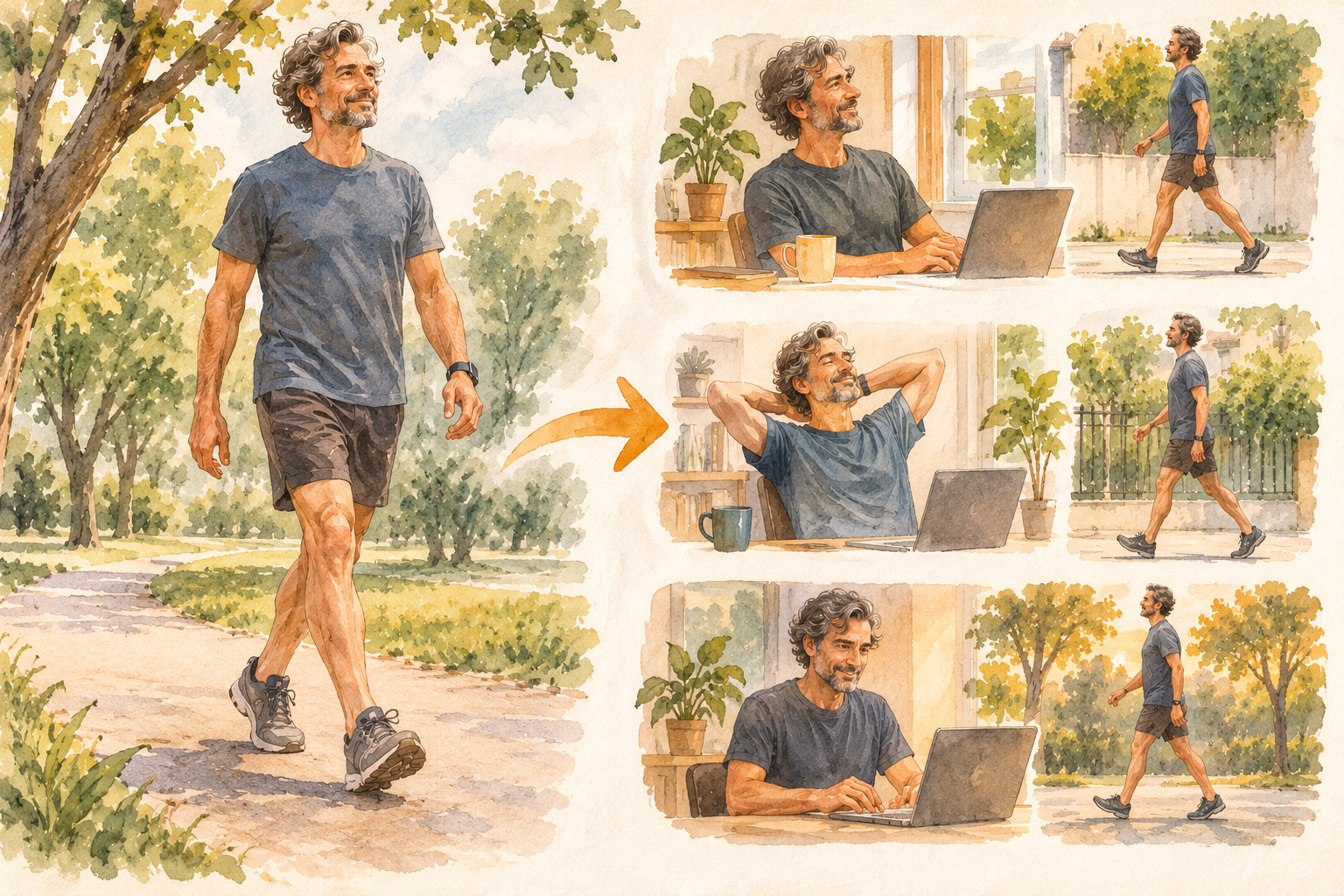
The randomized study followed 30 sedentary adults with overweight or obesity for six weeks. One group walked briskly for 45 minutes in a single session on five days each week. The other accumulated the same 45 minutes through brief walking breaks spread throughout the day.
In the frequent-break group, time spent in the study’s defined glucose range increased from 82% to 94%. Researchers also saw lower day-to-day glucose variability. Neither walking pattern produced a detectable improvement in whole-body insulin sensitivity, and some measurements did not show statistically clear differences between groups.
Why the schedule matters
Both groups were assigned 45 minutes of brisk walking. The question was about timing, not the total amount of activity. Working muscles use glucose, so shorter gaps between bouts of movement are one plausible reason for differences in glucose readings. This is a physiological explanation, not something the trial proved on its own.
The comparison is particularly relevant to people who exercise but remain seated for much of the workday. It does not establish that frequent walking breaks improve every measure of metabolic health.
A practical option for desk-bound days
For someone who works at a desk, a break between meetings or a short walk around the workplace may be an easier place to start than restructuring an entire exercise routine. In this trial, the frequent-break group used roughly five-minute walks each hour over nine hours. That was the study schedule, not a prescription for everyone.
Try this: Identify one long sitting period in your day and, if walking is appropriate for you, use an existing break to move. Keep your usual exercise routine; the study did not test brief walking breaks as a replacement for it.
What the glucose numbers mean
The rise from 82% to 94% refers to the share of monitored time spent within the glucose range defined by the researchers in the frequent-break group. It is not a 12% reduction in diabetes risk, nor does it mean that everyone who takes walking breaks will see the same change. The absence of a detectable improvement in whole-body insulin sensitivity also matters: different metabolic measurements can tell different stories, and a favorable result in one does not establish a broad health benefit.
Limits of the evidence
This was a small, short-term trial involving generally younger adults with sedentary habits. Diet and meal timing were not tightly controlled during everyday glucose monitoring. We cannot conclude that this approach prevents type 2 diabetes, lowers average blood sugar in everyone, or works equally well for people with existing medical conditions.
For related context, explore our evidence-focused guide to cinnamon and blood sugar research—a separate topic where promising mechanisms also need to be distinguished from proven clinical outcomes.
Healthy Routine Lab editorial note: We covered this trial because it isolates a practical question that workout totals alone can miss: how movement is distributed across a sedentary day. Its glucose findings deserve attention, but the limited sample and duration keep us from treating the schedule as a proven diabetes-prevention strategy.
Sources
- Original trial in Obesity (November 2026)
- News reference: Medical News Today (November 22, 2026).
Healthy Routine Lab provides educational information, not personal medical advice. Discuss changes to diabetes treatment or exercise restrictions with your clinician.