
Most people who search for l-carnitine benefits already have a version of the story in their head. It burns fat. It boosts energy. Athletes use it. Maybe it helps with weight loss. That version is not wrong — but it is incomplete in ways that actually matter when you are deciding whether to supplement, at what dose, in which form, and for which specific goal.
The real picture is more interesting, and more honest. L-carnitine is one of the most studied compounds in sports nutrition and metabolic research, with a clinical record spanning cardiovascular disease, fertility, blood sugar regulation, cognitive aging, and exercise performance. It also has a legitimate controversy attached to it — a metabolic byproduct called TMAO that some researchers have flagged as a potential cardiovascular concern under specific conditions. None of that complexity shows up in the average supplement label. This post covers all of it, including what the research actually supports, where the evidence is weaker than the marketing suggests, who stands to benefit most, and what dosage and timing look like in real clinical trials rather than in brand copy.
What Is L-Carnitine?
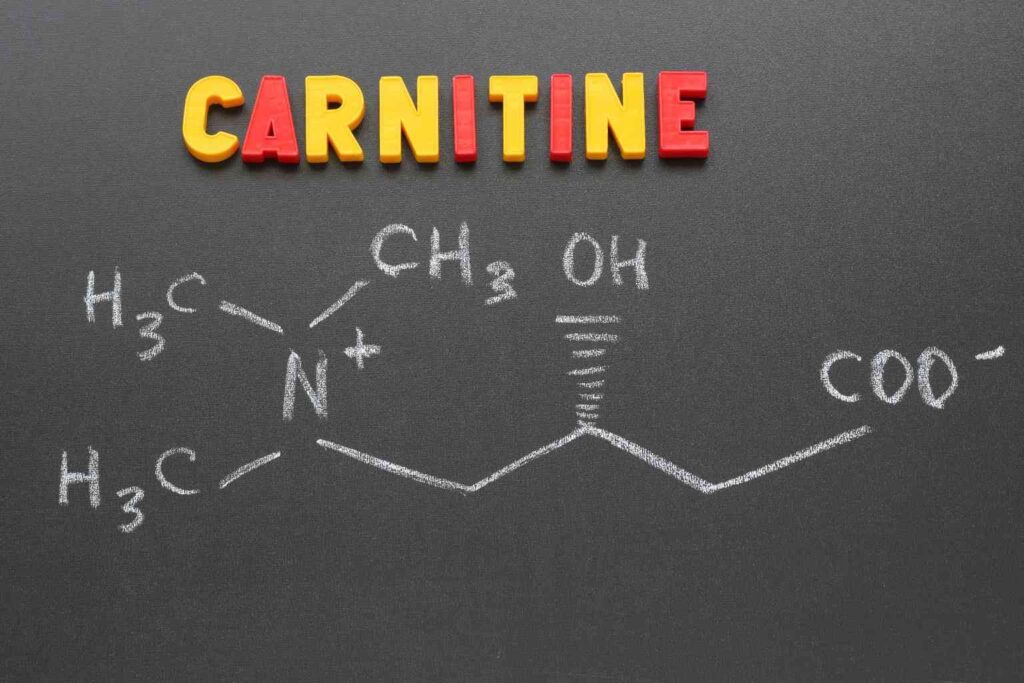
L-carnitine is an amino acid derivative — technically a quaternary ammonium compound — synthesized in the human body from two essential amino acids, lysine and methionine. The liver and kidneys handle most of the production, and the brain contributes as well. From there, carnitine is transported to tissues that have the highest energy demands, particularly skeletal muscle and the heart, where roughly 95% of the body’s total carnitine pool resides.
Its primary biological job is transport. Specifically, l-carnitine shuttles long-chain fatty acids across the inner mitochondrial membrane, where they can be oxidized and converted into ATP — the energy currency every cell runs on. Without adequate carnitine, that transport step fails. Long-chain fats accumulate in the cytoplasm, the mitochondria run short on substrate, and energy production is compromised. That is the core mechanism behind nearly every benefit attributed to this compound.
The name comes from the Latin carnis, meaning meat — which is also a hint about where most dietary carnitine comes from.
L-Carnitine, Levocarnitine, and the Four Forms: Which One Actually Matters
This is where most content falls short. “L-carnitine” is often used as a catch-all label, but there are four commercially relevant forms, each with a distinct bioavailability profile, tissue distribution, and primary use case. Treating them as interchangeable is one of the most common errors in supplement marketing.
L-Carnitine (standard form): The baseline form. Used in most weight loss and metabolism-focused supplements. Best studied for fat oxidation, cardiovascular support, and blood sugar regulation.
Acetyl-L-Carnitine (ALCAR): The acetylated form. Crosses the blood-brain barrier more efficiently than standard L-carnitine, making it the preferred form for cognitive applications. Also has antioxidant activity in neural tissue. If brain health is the goal, ALCAR is the relevant form.
Propionyl-L-Carnitine (PLC): Studied specifically for vascular conditions, particularly peripheral artery disease and intermittent claudication. Shows the strongest evidence for improving walking distance and reducing leg pain in people with compromised circulation.
L-Carnitine L-Tartrate (LCLT): A salt form with faster absorption kinetics. Common in sports nutrition for exercise recovery, muscle damage reduction, and androgen receptor upregulation post-exercise.
When you see “l-carnitine benefits” listed generically — for fat loss, energy, brain, and heart all at once — the honest answer is that no single form optimally serves all those goals simultaneously. The research is form-specific in ways that matter.
L-Carnitine Deficiency: Who Is Actually at Risk
Clinical carnitine deficiency is rare. It typically results from specific genetic mutations affecting the OCTN2 transporter — the protein responsible for carnitine absorption and renal reabsorption — or from certain metabolic disorders. That form of deficiency is a medical condition requiring pharmaceutical-grade levocarnitine.
Functional depletion is a different story. Several groups consistently show lower carnitine status without meeting the threshold for clinical deficiency: people following plant-based diets (vegetarians absorb roughly 66–86% less dietary carnitine than omnivores), older adults whose endogenous synthesis declines with age, individuals on long-term valproic acid or certain antibiotic regimens, and people with chronic kidney disease on dialysis.
For these groups, supplementation is not about fixing a disease — it is about maintaining a carnitine pool sufficient for optimal metabolic function. That distinction matters for how you frame the decision to supplement.
Natural Food Sources of L-Carnitine
The name gives it away. Red meat is by far the richest dietary source, with beef providing approximately 56–162 mg of carnitine per 100g serving depending on the cut. Pork and lamb are also meaningful sources. Poultry and fish contribute smaller amounts — chicken delivers around 3–5 mg per 100g, cod even less.

Dairy products provide moderate amounts. Whole milk contains roughly 2–8 mg per 240ml serving, and cheese contributes variably depending on type. Plant foods are essentially non-contributors — the carnitine content of fruits, vegetables, grains, and legumes is negligible.
For someone eating a mixed omnivore diet with regular red meat consumption, dietary intake may contribute 60–180 mg of carnitine per day. Total body carnitine synthesis adds another layer on top of that. Vegetarians and vegans depend almost entirely on endogenous synthesis, which the body can accomplish given adequate lysine, methionine, vitamins C, B6, and niacin — but at levels that may fall short of what supplementation would provide. Whether that gap is clinically meaningful depends on the individual’s metabolic demands and health goals.
How Does L-Carnitine Work? The Mitochondrial Shuttle Most Explanations Oversimplify
The standard explanation — “carnitine transports fat into cells to be burned for energy” — is technically directional but mechanistically incomplete. Here is a more accurate account of what is actually happening at the cellular level.
Carnitine Palmitoyltransferase 1 (CPT1): Long-chain fatty acids in the cytoplasm are first activated by coenzyme A (CoA) into fatty acyl-CoA molecules. CPT1, located on the outer mitochondrial membrane, catalyzes the transfer of the acyl group from CoA to carnitine, forming acylcarnitine. This step is the rate-limiting gate for fatty acid entry into the mitochondria. Carnitine availability directly governs how fast this gate opens.
The Carnitine Shuttle: Acylcarnitines cross the inner mitochondrial membrane via the carnitine/acylcarnitine carrier (CAC). Inside the mitochondrial matrix, CPT2 reverses the reaction — regenerating acyl-CoA and free carnitine. The acyl-CoA enters beta-oxidation. The free carnitine cycles back.
Beta-Oxidation: The actual fat-burning step. Each cycle of beta-oxidation cleaves two carbon units from the fatty acid chain, producing acetyl-CoA, FADH2, and NADH. Acetyl-CoA feeds the TCA cycle, generating the electron carriers that drive ATP synthesis. This is where fat becomes usable energy.
Acetyl-CoA/CoA Ratio Regulation: Beyond transport, carnitine buffers the acetyl-CoA/CoA ratio inside the mitochondria. When acetyl-CoA accumulates faster than it can be processed, carnitine accepts the acetyl groups — forming acetylcarnitine — and exports them, preventing metabolic bottlenecks. This buffering function is why carnitine status matters even in cells that are not primarily fat-burning.
Antioxidant Activity in Reproductive Tissue: In the epididymis, carnitine serves a specialized function as an antioxidant substrate protecting spermatozoa from oxidative stress. Reactive oxygen species (ROS) damage sperm DNA, plasma membranes, and motility. Carnitine — particularly in its acetylated form — helps neutralize ROS in the reproductive tract, which connects directly to the fertility applications discussed later.
L-Carnitine Benefits: What the Research Actually Shows
1. Fat Burning and Weight Loss: Modest, Real, and Dose-Dependent
A 2020 meta-analysis published in Obesity Reviews pooled data from 37 randomized controlled trials involving 2,292 participants and reported that l-carnitine supplementation significantly reduced body weight by a weighted mean difference of 1.21 kg, BMI by 0.24 kg/m², and fat mass by 2.08 kg compared to placebo. The effect was strongest in adults with overweight or obesity, and a non-linear dose-response analysis identified 2,000 mg/day as the dose associated with maximum weight reduction.

That is a real effect. It is not a dramatic effect. Nobody loses 15 pounds from carnitine alone in eight weeks. But across dozens of trials, the signal is consistent: l-carnitine supports fat oxidation in ways that translate to measurable reductions in body weight and fat mass, particularly when other variables — diet, activity, baseline metabolic health — are reasonably controlled. For a compound that operates through a legitimate metabolic mechanism rather than stimulant-driven appetite suppression, a 1–2 kg differential over 12–24 weeks is meaningful when stacked against a longer-term strategy.
2. Energy Production: Why the Fatigue Connection Goes Deeper Than Most Realize
The connection between l-carnitine and energy is not about stimulation. There is no caffeine-like mechanism, no adrenal surge, no acute alertness response. What l-carnitine provides is substrate access — the difference between having fuel available at the cellular level and not having it.
When carnitine is suboptimal, long-chain fatty acids cannot efficiently enter the mitochondria. Cells shift toward glucose as a primary fuel, which is metabolically less efficient and more dependent on dietary intake. The practical result is energy that fluctuates more, recovery that is slower, and fatigue that accumulates faster under metabolic stress. This is particularly relevant for older adults, whose carnitine synthesis declines with age, and for people managing chronic conditions that deplete carnitine as a secondary effect.
Studies in cancer patients — a population with known carnitine depletion from chemotherapy and malnutrition — have documented improvements in global health status, GI symptoms, and cognitive function with l-carnitine supplementation. That is a specific clinical context, but it illustrates the substrate-access mechanism in a population where depletion is measurable and the intervention response is clearly visible.
3. Heart Health: The Cardiovascular Evidence — and the Controversy You Should Know
The cardiovascular data on l-carnitine is probably its strongest — and its most complicated.
On the positive side, a meta-analysis of 13 randomized trials involving 3,629 adults with acute myocardial infarction found that l-carnitine significantly reduced all-cause mortality, ventricular arrhythmias, and new-onset angina compared to placebo. A separate meta-analysis of 17 trials in 1,625 adults with chronic heart failure found improvements in left ventricular ejection fraction (4.14%), stroke volume (8.21 mL), and cardiac output (0.88 L/min). The cardiac muscle depends on fatty acid oxidation for approximately 70% of its ATP supply, and carnitine is essential to that process.

The controversy is real, and it deserves honest coverage. Research published in Nature Medicine and subsequently debated extensively in cardiovascular literature identified trimethylamine-N-oxide (TMAO) as a potential concern. When intestinal bacteria metabolize carnitine, one pathway produces trimethylamine (TMA), which is then converted to TMAO in the liver. Elevated TMAO levels have been associated with accelerated atherosclerosis in some research. A 2022 clinical trial in 157 adults with metabolic syndrome found that l-carnitine supplementation was associated with higher total cholesterol, LDL cholesterol, and — specifically in low-red-meat-eating men — greater carotid arterial plaque stenosis at six months.
The TMAO question is not settled science. Effect sizes vary considerably across studies, and the clinical significance of TMAO elevations from supplementation remains debated. But it is a legitimate signal that warrants mention, particularly for people with existing cardiovascular risk or those planning very long-term supplementation. Anyone in that category should discuss carnitine with their physician.
4. Blood Sugar and Insulin Sensitivity: The Diabetes Connection
A 2023 meta-analysis in a peer-reviewed clinical nutrition journal pooled data from 41 randomized controlled trials in 2,900 adults and found that l-carnitine supplementation at doses of 0.25 to 4 g/day for 2 to 52 weeks significantly reduced fasting blood glucose, insulin resistance markers, and HbA1c. The populations studied included people with type 2 diabetes, obesity, PCOS, and nonalcoholic fatty liver disease.
The mechanism connects back to mitochondrial fatty acid oxidation. When fatty acid metabolism is impaired — as occurs in insulin-resistant states — lipid intermediates accumulate in muscle cells and interfere with insulin signaling. By restoring efficient fat oxidation, carnitine may reduce some of that metabolic interference. A separate 2023 review noted potential improvements in fasting blood sugar and insulin sensitivity specifically in people with diabetes, overweight, or obesity.
The key qualifier: most of this evidence comes from people with pre-existing metabolic conditions, not healthy adults with normal glucose regulation. Expecting blood sugar benefits from l-carnitine if your glucose is already well-managed is extrapolating further than the data currently supports.
5. Cognitive Function: Where Acetyl-L-Carnitine Has the Strongest Case
Standard l-carnitine does not cross the blood-brain barrier efficiently. Acetyl-l-carnitine does. That distinction is what makes ALCAR the relevant form for cognitive applications — and why lumping all carnitine forms together misrepresents what the research actually shows.

A 2018 study found that 1,500 mg of ALCAR daily for 28 weeks produced significant improvements in cognitive function in people with dementia. Animal and in vitro research on ALCAR shows consistent effects on mitochondrial function in neural tissue, antioxidant protection of hippocampal cells, and support for acetylcholine precursor availability. The evidence in cognitively intact younger adults is thinner — a 2017 review found no effect on reaction time, vigilance, or immediate memory after three days of supplementation in young adults without impairment.
The realistic picture: ALCAR is a credible option for older adults concerned about age-related cognitive decline, particularly in the context of carnitine depletion that naturally accompanies aging. It is not a smart drug or a nootropic in the stimulant sense. It supports mitochondrial health in neural tissue over time.
6. Male Fertility: Sperm Motility, Oxidative Stress, and Real Clinical Data
L-carnitine is the most abundant small molecule in mature human spermatozoa. That is not a marketing claim — it is a physiological fact documented in reproductive biology literature since the 1970s. The epidididymis, where sperm undergo final maturation, maintains carnitine concentrations roughly 2,000 times higher than blood plasma levels. Carnitine fuels the beta-oxidation that generates ATP for sperm motility and serves as an antioxidant substrate protecting sperm DNA from reactive oxygen species.
A systematic review and meta-analysis published in Reproduction & Fertility (PMC, 2022) evaluated carnitine supplementation for idiopathic male infertility across multiple trials. Men with low sperm motility — asthenozoospermia — showed the most consistent improvement with combined L-carnitine and acetyl-L-carnitine supplementation at total daily doses of at least 3 g. Sperm concentration, progressive motility, and total sperm count improved across studies, though the methodological quality of individual trials varies, and the authors appropriately note that more large-scale placebo-controlled trials are needed.
The fertility application is one of the most clinically grounded uses of l-carnitine, with a mechanistic rationale that is hard to dispute — and it is almost never mentioned in the weight-loss-focused content that dominates search results.
7. PCOS and Female Fertility: An Overlooked Application with Growing Evidence
Women with polycystic ovary syndrome (PCOS) deal with hormonal dysregulation, insulin resistance, anovulation, and in many cases, subfertility. Carnitine is relevant to several of those pathways simultaneously.
A 2024 systematic review and dose-response meta-analysis published in the Obstetrics & Gynecology Science journal pooled data from 8 randomized controlled trials involving 1,046 women with PCOS. The l-carnitine group showed significantly increased chemical and clinical pregnancy rates, ovulation rates, progesterone levels, number of pre-ovulatory follicles greater than 17mm in diameter, and endometrial thickness compared to controls. The dose-response analysis found that prolonged intake was associated with increases in estrogen levels as well.
This is one of the more robust evidence bases for any supplement application in PCOS management, and it is consistently underreported in general-audience content. Part of the reason is that most carnitine marketing targets fitness and weight loss, leaving this evidence essentially invisible to the women who might benefit most from knowing it exists.
8. Exercise Recovery and Muscle Damage: The Athletic Use Case
Here is where the athletic marketing around l-carnitine gets complicated by the actual biology. Carnitine supplementation alone — without co-ingestion of carbohydrates — does not reliably elevate muscle carnitine content within 12 weeks. The research on this is clear. Skeletal muscle uptake of supplemental carnitine requires an insulin-stimulating environment, which is why the most effective protocols combine carnitine with a carbohydrate load.
What standard L-Carnitine L-Tartrate supplementation does show consistent evidence for is reduction of exercise-induced muscle damage, decreased post-exercise markers of oxidative stress, and improved recovery metrics between training sessions. A systematic review in the Journal of the International Society of Sports Nutrition (2020) reviewed 11 trials in healthy human subjects and found mixed results for direct performance enhancement, but noted that prolonged supplementation in combination with carbohydrates does elevate muscle total carnitine content with functional implications for high-intensity effort tolerance.
The takeaway: l-carnitine is not a pre-workout stimulant. Its recovery and performance benefits are real, indirect, and cumulative over weeks — not acute.
Does L-Carnitine Work Without Exercise?
This question gets a surprisingly honest answer from the clinical literature: yes, in several contexts — but not equally for all goals.

The evidence for blood sugar regulation, cardiovascular support, and fertility improvement comes primarily from trials in non-athletic or sedentary populations. Those benefits operate through mechanisms that do not require physical activity — insulin signaling, fatty acid metabolism in cardiac tissue, sperm mitochondrial function. Exercise is not the pathway.
For body weight and fat mass reduction, the picture is more nuanced. The 2020 meta-analysis that found meaningful weight reduction across 37 trials included studies in both sedentary and active populations, and the effect was present in both — but it is mechanistically amplified by physical activity, because exercise increases the demand for fatty acid oxidation and thus increases the payoff from having efficient carnitine transport. The compound works without exercise; it works better with it.
The practical implication: if you are supplementing for metabolic health, blood sugar, heart support, or fertility, exercise is not a prerequisite for benefit. If body composition is the primary goal, carnitine as part of a lifestyle that includes some activity will outperform carnitine as a standalone passive intervention.
L-Carnitine vs. Creatine: Which One Is Right for Your Goal
These two supplements get compared constantly, and the comparison is often framed as a competition. It is not. They operate through completely different mechanisms, serve different primary goals, and are most useful for different user profiles.
Creatine works by expanding the phosphocreatine pool in skeletal muscle, enabling faster ATP regeneration during high-intensity, short-duration efforts — lifting, sprinting, explosive power output. Its effects on strength, muscle mass, and high-intensity performance are among the most replicated in all of sports nutrition research. Effect onset is fast, often within one to two weeks of loading.
L-Carnitine works upstream of ATP production — at the fat import step into the mitochondria. It supports aerobic energy metabolism, fat oxidation, recovery, and cardiovascular and metabolic health. Its effects accumulate over weeks and months. It has a much broader non-athletic application base than creatine, including cardiovascular health, fertility, blood sugar regulation, and cognitive aging.
The user for whom creatine makes more sense: someone whose primary goal is strength, hypertrophy, or performance in high-intensity training, with an otherwise healthy metabolic and cardiovascular profile.
The user for whom l-carnitine makes more sense: someone focused on fat oxidation, longer-duration endurance, metabolic health, cardiovascular support, fertility, or who is older, vegetarian, or managing conditions associated with carnitine depletion.
They can be taken together without interaction. They are not substitutes for each other.
Who Benefits Most from L-Carnitine
L-Carnitine for Women Over 50: Metabolism, Energy, and Hormonal Shifts
Endogenous carnitine synthesis declines with age. Skeletal muscle carnitine content, which peaks in young adulthood, decreases progressively across the decades. For women navigating perimenopause and post-menopause — a period already characterized by shifts in fat metabolism, mitochondrial efficiency, insulin sensitivity, and energy levels — declining carnitine status is one more factor stacking in the wrong direction.
Research in centenarians showed that 24 weeks of l-carnitine supplementation significantly increased muscle mass, improved physical effort tolerance, and enhanced cognitive function — a population study that underscores how meaningful carnitine repletion can be when endogenous production has genuinely declined. For women over 50, carnitine is not a performance supplement. It is a maintenance tool for the metabolic machinery that age gradually erodes.
L-Carnitine for Men: Fertility, Energy, and the Testosterone Angle
The fertility application is the most clinically documented use of l-carnitine in men, and it is one that the fitness-focused supplement marketing almost never mentions. Men with low sperm motility — one of the most common forms of male infertility — have consistently lower epididymal carnitine concentrations than fertile controls. Restoring those concentrations through supplementation improves sperm motility through the direct mechanism of mitochondrial ATP production in flagellar function.
Beyond fertility, older research also found that l-carnitine supplementation improved symptoms of sexual dysfunction, fatigue, and mood in aging men — outcomes that intersect with the testosterone decline narrative without directly targeting testosterone itself. The mechanism is likely mitochondrial — maintaining cellular energy availability across tissues that depend on it.
Vegans, Vegetarians, and Anyone Who Eats Little Red Meat
For vegans and vegetarians, carnitine deficiency is rarely clinical but functional depletion is plausible. The body can synthesize carnitine from lysine and methionine — amino acids present in plant foods — but the synthesis rate may not match the needs of someone with higher metabolic demands, a very active lifestyle, or specific health goals that carnitine supports. Studies have documented that plasma carnitine levels in vegetarians are meaningfully lower than in omnivores, and that supplementation raises those levels and can improve biomarkers of fat oxidation in this group.

If you eat plant-based and feel chronically low in energy, especially during extended aerobic activity, carnitine status is a reasonable variable to explore with a healthcare provider.
L-Carnitine Benefits in Modern Supplements
L-carnitine is increasingly present not just in standalone supplements but in multi-ingredient metabolism formulas — sometimes as a primary driver, sometimes as one component among several that target different aspects of energy metabolism and fat oxidation.
Metabo Drops: L-Carnitine in a Liquid Metabolism Formula
Metabo Drops is one of the supplements reviewed on this site that includes l-carnitine as part of a broader metabolic support formula. What is interesting about its formulation is the combination: l-carnitine is paired with l-theanine (which modulates the nervous system’s stress response without sedation) and chlorogenic acid (a compound from green coffee extract linked to glucose absorption and fat oxidation). The liquid serum format is designed for faster absorption compared to capsules — which is relevant for l-carnitine given that bioavailability can vary significantly by delivery mechanism.

If you want a full breakdown of the formula, dosages, pricing, and guarantee, you can read the complete Metabo Drops review on this site.
How Long Does L-Carnitine Take to Work?
The honest answer is: it depends on what you are supplementing for, and most of the timelines are longer than the supplement industry suggests.
For blood sugar and insulin sensitivity, some trials have documented measurable changes within 2–4 weeks at doses of 1–2 g/day. For energy and fatigue reduction, the window is similar — 2–6 weeks for noticeable effects in populations with genuine depletion. For body composition (fat mass, body weight), the trials showing meaningful effects ran 12–24 weeks, and the 2020 meta-analysis confirms that shorter supplementation periods produced smaller and less consistent results.
For male fertility, the clinical studies used supplementation periods of 3 to 6 months, which aligns with the biology: sperm production cycles take approximately 74 days from spermatogenesis to maturation, meaning any intervention needs to cover at least two full cycles to show up in semen analysis.
For cardiovascular endpoints, the trials in heart failure and post-myocardial infarction populations used protocols ranging from 7 days to 3 years, with cardiovascular function improvements appearing within weeks in acute settings and accumulating over months in chronic disease management.
The practical takeaway: if you try l-carnitine for two weeks, do not see dramatic changes, and conclude it does not work — you have not given it a fair trial. The compound operates on timelines measured in weeks and months, not days.
L-Carnitine Dosage, Timing, and Safety
Dosage: What the Research Uses vs. What Supplements Deliver
The dose matters more than most supplement labels acknowledge. Here is what the clinical literature actually uses:
For general fat oxidation and weight management: 1,000–2,000 mg/day. The 2020 meta-analysis identified 2,000 mg/day as the dose associated with maximum body weight reduction — a non-linear dose-response relationship meaning more is not automatically better.
For cardiovascular support: 2,000–6,000 mg/day in most cardiac trials, often divided across two doses.
For male fertility (combined l-carnitine + acetyl-l-carnitine): total of 3,000 mg/day or more, based on the trials showing sperm motility improvement.
For cognitive support (ALCAR specifically): 1,500–2,000 mg/day in studies showing benefits in older adults with cognitive decline.
Many over-the-counter supplements provide 500–1,000 mg per serving. That is below the threshold used in most body composition and cardiovascular trials. Whether that dose is sufficient for a given individual depends on their baseline carnitine status, dietary intake, and specific goal — but it is worth knowing that the research-effective doses are often higher than what standard supplements deliver.
When to Take L-Carnitine: Morning, Pre-Workout, or Before Meals
There is no definitive clinical consensus on optimal timing. What the biology suggests: l-carnitine taken alongside carbohydrates produces higher insulin levels, which facilitates skeletal muscle carnitine uptake. This is particularly relevant for athletes aiming to raise muscle carnitine content over time. For that specific goal, taking l-carnitine with a carbohydrate-containing meal — or as part of a pre-workout protocol that includes carbohydrate — has the most mechanistic rationale.
For metabolic health goals, pre-meal timing is commonly used in clinical trials, allowing the compound to support fat oxidation in the post-absorptive window. For general daily support without a specific athletic goal, morning dosing with breakfast is a practical and consistent approach.
Safety and Side Effects: What the Research Found (Including the TMAO Question)
L-carnitine is generally recognized as safe at doses of up to 2,000 mg/day for periods up to 12 months. The most common adverse effects at standard doses are mild and gastrointestinal: nausea, stomach cramping, and diarrhea in some individuals, particularly at higher doses. A fishy odor in urine, sweat, or breath is also reported — a direct consequence of carnitine’s metabolic processing.
The TMAO concern deserves a straightforward summary: intestinal bacteria metabolize carnitine to trimethylamine (TMA), which the liver oxidizes to TMAO. Elevated circulating TMAO has been associated with increased cardiovascular risk in some epidemiological research. The clinical significance of TMAO elevation specifically from carnitine supplementation — as opposed to from dietary red meat — remains under active debate. The 2022 trial in metabolic syndrome patients that found increased carotid plaque stenosis in a subgroup of low-red-meat-eating men is a real signal that warrants attention, particularly for people who are already at elevated cardiovascular risk. It is not a reason to universally avoid carnitine, but it is a reason to have the conversation with your physician if you have existing heart disease or strong cardiovascular risk factors and are planning long-term supplementation.
Interactions and Precautions
Several drug interactions warrant attention. Anticoagulants (particularly acenocoumarol) have been documented to interact with l-carnitine, with case reports of altered bleeding time. Anticonvulsants — valproic acid in particular — can deplete carnitine, and some clinicians use carnitine to counteract valproate-induced toxicity; but anyone taking anticonvulsants should coordinate with their neurologist before supplementing. Thyroid hormone medications may also have interactions depending on the specific medication and dose.
Pregnancy is a context where carnitine needs may increase — pregnant women are at higher risk of carnitine depletion — but supplementation during pregnancy or breastfeeding should be discussed with a healthcare provider rather than pursued independently. L-carnitine is not classified as safe for independent supplementation during pregnancy based on current evidence.
Frequently Asked Questions About L-Carnitine
Does L-Carnitine Work Without Exercise?
Yes — for several of its documented applications. Blood sugar regulation, cardiovascular support, male and female fertility, and cognitive support all operate through mechanisms that do not require physical activity. For body weight and fat mass, the effects exist without exercise but are meaningfully amplified by it.
How Long Does L-Carnitine Take to Work?
For blood sugar and energy: 2–6 weeks. For body composition: 12–24 weeks at minimum. For male fertility: 3–6 months to cover full spermatogenesis cycles. For cardiovascular function: varies by condition, from weeks in acute settings to months in chronic disease management.
What Is the Best Time to Take L-Carnitine for Weight Loss?
No clinical consensus exists on optimal timing, but pre-meal or with a carbohydrate-containing meal has the best mechanistic rationale for supporting muscle carnitine uptake and fat oxidation. Morning dosing with breakfast is a practical default for general use.
How Much L-Carnitine Per Day for Weight Loss?
The 2020 meta-analysis of 37 RCTs identified 2,000 mg/day as the dose associated with maximum body weight reduction. Most studies showing meaningful fat mass changes used 1,500–3,000 mg/day over 12–24 weeks. Many commercial supplements provide 500–1,000 mg per serving — below the threshold used in the strongest body composition trials.
What Is the Difference Between L-Carnitine and Acetyl-L-Carnitine?
Acetyl-l-carnitine (ALCAR) crosses the blood-brain barrier more efficiently and has stronger evidence for cognitive applications and neural antioxidant activity. Standard l-carnitine is better studied for fat metabolism, cardiovascular support, and fertility. They are related compounds with overlapping but distinct clinical profiles — not interchangeable versions of the same thing.
Is L-Carnitine Safe for the Kidneys?
In people with healthy kidney function, l-carnitine at doses up to 2,000 mg/day for up to 12 months is considered safe. The FDA has approved IV levocarnitine specifically for kidney failure patients on hemodialysis — a context where carnitine depletion is a documented complication of dialysis. For people with existing kidney disease, supplementation decisions should be made with a nephrologist.
Can Women with PCOS Take L-Carnitine?
The evidence supports it. A 2024 meta-analysis of 8 RCTs in 1,046 women with PCOS found significant improvements in pregnancy rates, ovulation rates, progesterone levels, and endometrial thickness. L-carnitine is not a standard first-line PCOS treatment, but it has one of the more robust evidence bases of any supplement studied in this population. Anyone with PCOS should discuss supplementation with their gynecologist or endocrinologist, particularly regarding dose and any medications they are already taking.
Does L-Carnitine Come Naturally from Food, or Do You Need a Supplement?
Omnivores consuming regular red meat get meaningful dietary carnitine. Vegetarians and vegans obtain very little from food and rely primarily on endogenous synthesis, which may not fully meet demands for people with higher metabolic needs. Whether supplementation is warranted depends on goals, baseline status, and health context.
Is L-Carnitine Liquid Better Than Capsules?
Liquid carnitine formulations may offer faster absorption kinetics compared to capsules, which require dissolution before active compounds are released. For goals where rapid tissue availability matters — such as pre-workout use — the liquid format has a theoretical advantage. For general daily metabolic support, the practical difference in outcome between well-formulated liquid and capsule forms is unlikely to be clinically significant.
L-Carnitine Benefits: The Bottom Line
L-carnitine benefits are real, documented, and broader than the weight-loss supplement category it usually gets filed under. As an ingredient, l-carnitine sits at the intersection of fat metabolism, mitochondrial energy production, cardiovascular function, blood sugar regulation, and reproductive health — a range that few compounds can credibly claim across clinical literature.
The important caveats: form matters (ALCAR for brain, PLC for circulation, LCLT for athletic recovery, standard l-carnitine for metabolic and cardiovascular support). Dose matters (2,000 mg/day is the research-supported threshold for body composition; lower doses in many commercial products may fall short). Timeline matters (most benefits require weeks to months, not days). And the TMAO question, while not a reason to avoid l-carnitine universally, is a reason to be thoughtful about long-term supplementation if cardiovascular risk is already elevated.
For most adults — especially those over 40, those eating plant-based diets, those managing blood sugar, or those dealing with fertility concerns — l-carnitine benefits are worth understanding carefully. This compound earns its place in a serious supplement stack not because of marketing, but because the underlying biology is sound and the clinical record, taken as a whole, is substantially more robust than average.
As with any supplement, discussing l-carnitine with a healthcare provider is the right starting point before adding it to your routine — particularly if you are taking medications or managing a chronic condition.
Disclaimer: The content on this page is intended for informational purposes only and does not constitute medical advice, diagnosis, or treatment. L-carnitine and other dietary supplements have not been evaluated by the Food and Drug Administration for the purposes described here. Always consult a qualified healthcare professional before starting any supplement regimen, especially if you have a pre-existing health condition, are pregnant or breastfeeding, or are taking prescription medications.