

When comparing fenugreek vs ashwagandha testosterone support, most content treats them as interchangeable options in the same category. They are not. These two herbs work through fundamentally different biological mechanisms — one targets how testosterone is bound in circulation, the other targets why the body is suppressing production in the first place. Choosing between them without understanding that distinction is like picking a tool without knowing what problem you are solving.
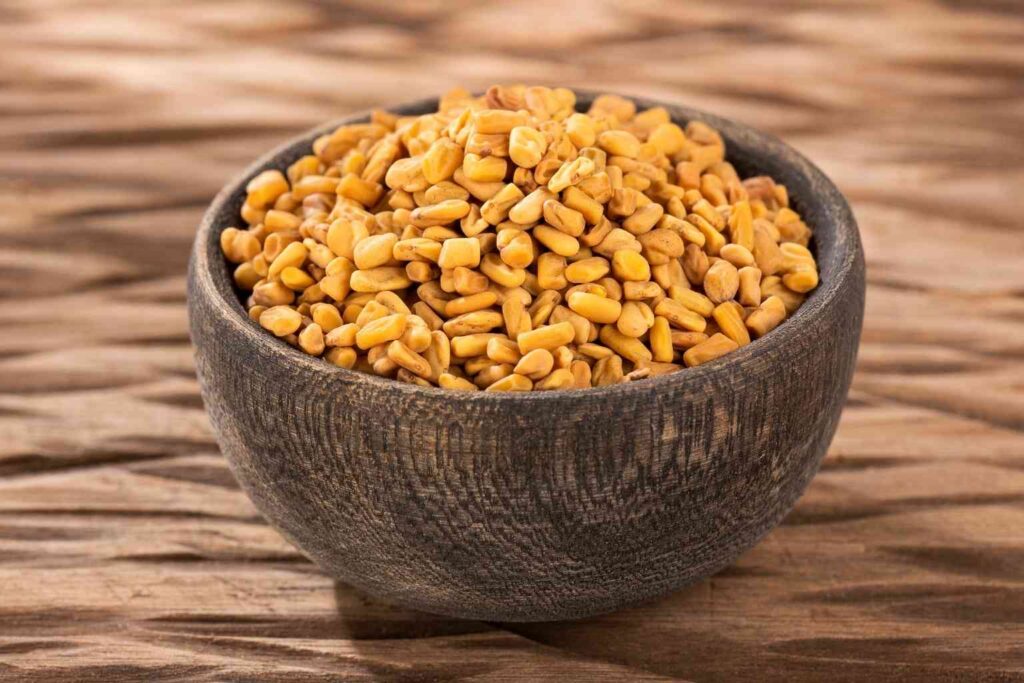
The short answer: if elevated SHBG is suppressing your free testosterone despite normal total levels, fenugreek targets that mechanism directly. If chronic stress and high cortisol are the root cause of your hormonal decline, ashwagandha addresses the problem at its source. Many men over 40 have both issues simultaneously — which is exactly why both ingredients appear together in well-designed formulas.
What the Research Shows on Fenugreek vs Ashwagandha Testosterone
Fenugreek’s primary mechanism in testosterone support is SHBG inhibition. Sex hormone-binding globulin binds testosterone in circulation, rendering it biologically inactive. A 2020 meta-analysis in Phytotherapy Research pooled four randomized controlled trials involving 236 men and found statistically significant increases in total serum testosterone with fenugreek extract supplementation. The active driver is diosgenin — a steroidal saponin that modulates androgen pathway enzymes and shifts the bound-to-free testosterone ratio without directly stimulating production.
Ashwagandha works through an entirely different pathway. Its primary mechanism is cortisol suppression via HPA axis regulation. Chronic cortisol elevation directly inhibits testosterone production at the hypothalamic-pituitary level. Multiple randomized controlled trials have confirmed that ashwagandha supplementation significantly reduces cortisol and, as a downstream effect, raises testosterone in men under chronic stress. The 2019 study in Medicine (Wankhede et al.) found a 15% increase in testosterone alongside significant cortisol reductions over 8 weeks.
Two different problems. Two different mechanisms. You can read a full breakdown of fenugreek’s clinical evidence in our complete fenugreek benefits guide.
Factors That Affect the Fenugreek vs Ashwagandha Testosterone Decision
Understanding your own hormonal picture determines which ingredient is the better fit.
Your stress and cortisol load. If you sleep poorly, feel chronically exhausted, or are under sustained professional or personal pressure, cortisol suppression is almost certainly part of your hormonal problem. Ashwagandha addresses that root cause directly. Fenugreek does not.
Your SHBG levels. SHBG rises naturally with age, particularly after 40. Men with normal total testosterone but low free testosterone on a blood panel are the clearest candidates for fenugreek’s SHBG-modulating mechanism. Without knowing your SHBG, you are guessing at the mechanism.
Age and baseline hormonal status. Younger men with stress-driven suppression tend to respond better to ashwagandha. Men over 45 with age-related SHBG elevation and metabolic changes tend to show more relevant responses to fenugreek. The two profiles often overlap significantly after 50.
Duration expectations. Both herbs require 8–12 weeks of consistent use to show measurable hormonal effects in clinical trials. Neither is a fast-acting intervention — choosing the right one matters more than optimizing the timing of either.
What To Look For in a Supplement
If the fenugreek vs ashwagandha testosterone comparison leads you toward a multi-ingredient formula — which is where both ingredients show the most practical value — look for products that include both rather than forcing a binary choice. The best formulas combine fenugreek’s SHBG-modulating action with ashwagandha’s cortisol-lowering effect, covering both mechanisms simultaneously. Also look for disclosed extract standardization on the label: Testofen (50% fenuside) for fenugreek and KSM-66 or Sensoril for ashwagandha are the most clinically validated forms of each.
ProstaVive includes both fenugreek and ashwagandha within a broader male vitality formula that also covers urinary comfort, circulation, and foundational micronutrients. The full review of ProstaVive breaks down how each ingredient contributes to the formula’s overall logic — and what realistic outcomes look like for men over 45 dealing with this combination of hormonal and metabolic changes.
For women navigating hormonal shifts during perimenopause, fenugreek’s phytoestrogenic and blood sugar-balancing properties are the more relevant mechanisms — and the full review of PrimeBiome covers how fenugreek fits within a gut-skin axis formula designed around exactly that hormonal transition.
Fenugreek vs Ashwagandha Testosterone – Bottom Line
The fenugreek vs ashwagandha testosterone question does not have a single winner — it has two different answers for two different problems. Fenugreek targets SHBG-driven suppression of free testosterone. Ashwagandha targets cortisol-driven suppression of testosterone production. If you have one problem, use the ingredient that addresses it. If you have both — which is common in men over 45 — a formula that combines them covers more ground than either alone.
For a complete breakdown of fenugreek’s mechanisms, clinical dosing, and how it compares across multiple health applications, visit our complete fenugreek benefits post.
Looking for more answers about fenugreek? You might also find these useful:
→ Fenugreek Before Bed or Morning: Does Timing Actually Make a Difference?
→ Fenugreek for Men Over 50: Testosterone, Blood Sugar, and What to Expect
This post is for informational and educational purposes only. The content is based on publicly available research and does not constitute medical advice. Results vary by individual. If you are pregnant, nursing, taking prescription medications, or managing a diagnosed health condition, consult your healthcare provider before adding any new supplement to your routine. These statements have not been evaluated by the Food and Drug Administration.