
There is a gap between how beetroot is marketed and what the research actually supports. Most content either oversells it — turning a root vegetable into a cardiovascular cure-all — or dismisses it with a wave of “the evidence is mixed.” Neither version is particularly useful if you are trying to decide whether beetroot supplementation makes sense for you.
The honest picture is more interesting than either extreme. Beetroot has some of the most replicated evidence of any food-based supplement in the cardiovascular and exercise performance space. It also has real limitations, real interactions, and real differences between forms that most people buying a powder or capsule never hear about. The beetroot benefits that show up consistently in clinical research are specific, mechanism-driven, and worth understanding clearly — not just as a list of claims, but as a chain of biology you can actually follow.
This post covers all of it: the compounds, the mechanisms, the benefits with the strongest evidence, the ones that are still preliminary, who genuinely stands to gain the most, and what dosage and timing actually look like in practice.
What Is Beetroot?
Beta vulgaris is a flowering plant in the Amaranthaceae family, cultivated across Europe, North America, and parts of Asia for at least two thousand years. For most of that history, it was food. The modern supplement industry arrived much later, and it arrived for a specific reason: beetroot turned out to be one of the richest dietary sources of inorganic nitrates, a class of compounds with a well-characterized pathway to nitric oxide production in the body.
That shift — from vegetable to functional ingredient — happened gradually through the 1990s and 2000s, as sports science researchers looking for legal ergogenic aids started documenting unusually consistent improvements in exercise efficiency when athletes consumed beetroot juice before training. The mechanism they identified was already known in cardiovascular pharmacology. What was new was seeing it triggered reproducibly by a food.
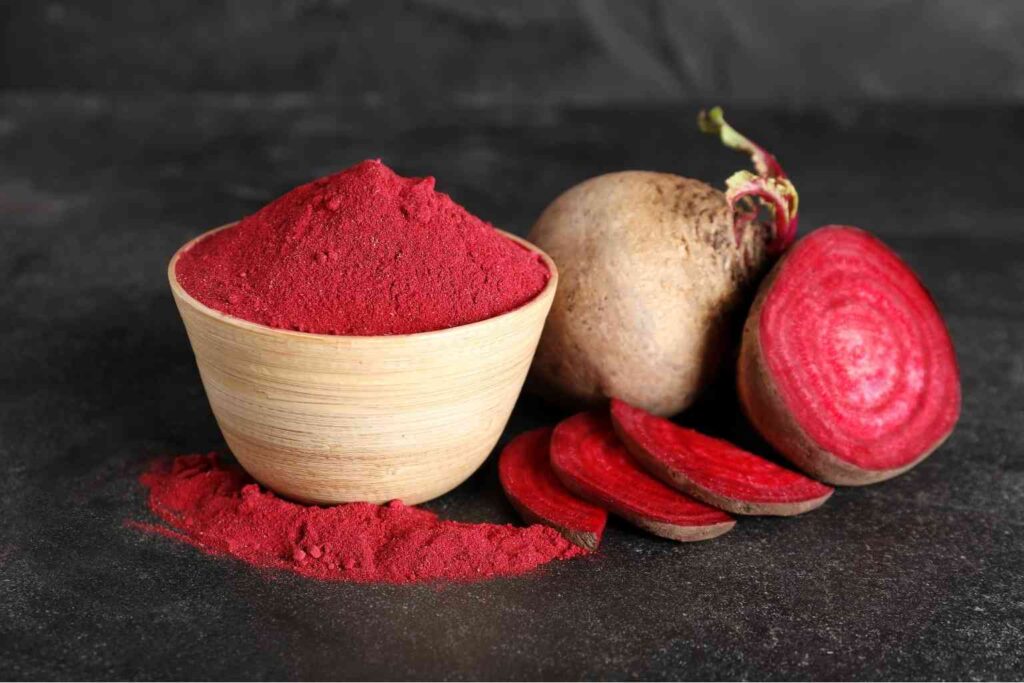
Today, beetroot is available as whole vegetable, juice, concentrated shot, powder, and standardized extract. Those forms are not equivalent. Understanding why is the first step to using beetroot intelligently.
Betalains, Nitrates, and Betaine — The Three Compounds That Matter
Beetroot contains dozens of bioactive compounds. Three of them account for virtually every clinically documented effect.
Dietary nitrates are the headline compound. Beetroot delivers the highest nitrate concentration of any commonly consumed vegetable, and inorganic nitrates are the direct precursors to nitric oxide via the entero-salivary nitrate-nitrite-NO pathway. This is the mechanism behind the blood pressure and exercise performance research.
Betalains are the pigments that give beetroot its characteristic deep red color — specifically betacyanins (red-violet) and betaxanthins (yellow-orange). They are potent antioxidants and have demonstrated anti-inflammatory activity in cell and animal models, with emerging human data. Betalains are heat-sensitive, which matters when choosing your form of beetroot.
Betaine (trimethylglycine) is a methyl donor involved in homocysteine metabolism and hepatic fat processing. It supports liver function and has some evidence for cardiovascular risk reduction through homocysteine-lowering pathways, independent of nitrates.
The reason this distinction matters: different forms of beetroot preserve these compounds differently. Cooking destroys betalains while largely sparing nitrates. If the betalain angle is your primary interest, raw or cold-processed powder is the better option. If nitric oxide support is the goal, form matters less than nitrate content — and nitrate content varies enormously across products.
Beetroot Powder, Extract, and Juice — Which Form Actually Works?
Testing by ConsumerLab found a greater than 100-fold difference in nitrate content across popular beetroot products — from under 5 mg per serving to nearly 500 mg per concentrated shot. That gap is not a rounding error. It is the difference between a dose with clinical plausibility and one that is essentially water with a red label.
Beetroot juice and concentrated shots tend to deliver the highest nitrate doses per serving, provided the product uses genuine beetroot rather than diluted or processed versions. The research literature is built predominantly on juice, usually 70–140 mL of high-nitrate juice delivering roughly 300–500 mg of nitrates.
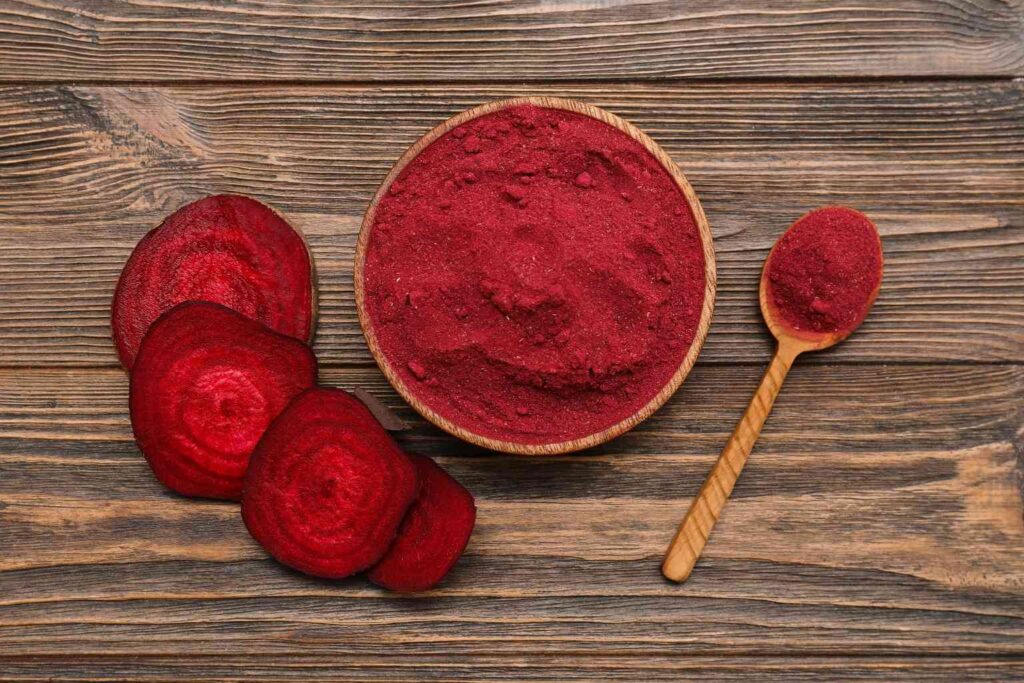
Beetroot powder is more convenient but more variable. Quality powders from cold-processing retain reasonable nitrate levels. Low-quality powders — especially those using high-heat processing — may lose significant nitrate content and effectively all betalains.
Standardized extracts are the most controlled form, typically standardized to a minimum percentage of nitrates or betalains, which gives you more predictable dosing per capsule.
The practical takeaway: always look for nitrate content listed on the label. A beetroot product that lists only milligrams of beetroot powder without specifying nitrate content is giving you very little useful information.
Natural Food Sources of Beetroot and Dietary Nitrates
Beetroot does not exist in isolation as a nitrate source. Understanding where it sits in the broader landscape of dietary nitrates helps calibrate realistic expectations from both food and supplements.
How Much Nitrate Is in Beetroot Compared to Other Foods?
Among commonly consumed vegetables, nitrate concentration runs roughly as follows, from highest to lowest:
Arugula (rucola) consistently tops the rankings, with nitrate levels often exceeding 4,000 mg per kilogram of fresh weight. Spinach and Swiss chard typically range from 1,500 to 2,500 mg/kg. Beetroot falls between 1,500 and 2,800 mg/kg depending on variety and growing conditions. Lettuce and celery contribute moderate amounts. Carrots and most other root vegetables deliver relatively little.
This means arugula, gram for gram, actually delivers more nitrates than beetroot. So why does the research focus on beetroot rather than salad greens?
Partly convenience — a concentrated shot of beetroot juice is far easier to standardize for research purposes than a precise serving of arugula. And partly because beetroot also delivers betalains and betaine in the same package, making it a more complete functional ingredient. But if you are primarily interested in natural ways to boost nitric oxide from food, a diet rich in all high-nitrate vegetables — not just beetroot — achieves the same underlying goal.
One important note: cooking significantly reduces nitrate content in most vegetables. Boiling beetroot can cut its nitrate levels by 50% or more, with the lost nitrates leaching into the cooking water. Roasting causes less loss. Raw juice and cold-processed powder preserve the most.
How Does Beetroot Work? The Nitrate-Nitrite-Nitric Oxide Pathway
The mechanism behind beetroot’s most documented effects follows a specific three-step sequence. Each step matters, and one of them involves bacteria in your mouth — a detail most content about nitric oxide production completely skips.
Step one: Dietary nitrates are absorbed in the small intestine and concentrated in saliva by the salivary glands, reaching levels in saliva that are ten to twenty times higher than in blood plasma.
Step two: Oral bacteria reduce nitrate to nitrite. This is the part that almost nobody discusses. Specific bacteria on the tongue — particularly species in the genus Veillonella and Rothia — possess nitrate reductase enzymes that convert nitrate to nitrite. Without this bacterial step, the pathway stalls. This is also why using antibacterial mouthwash before consuming beetroot juice significantly blunts the nitric oxide response — a finding documented in multiple studies.
Step three: Nitrite is converted to nitric oxide in the tissues and bloodstream, primarily under conditions of low oxygen and low pH, which occur naturally during exercise and in areas of the body where blood flow is restricted.
Nitric oxide (NO) then acts through several mechanisms:
Vasodilation — NO relaxes the smooth muscle in blood vessel walls, causing them to widen, which reduces vascular resistance and lowers blood pressure.
Improved oxygen efficiency — NO reduces the oxygen cost of muscle contractions, meaning muscles can do the same work while consuming less oxygen. This is the mechanism behind the VO2 max and exercise performance findings.
Platelet aggregation inhibition — NO reduces the stickiness of platelets, supporting healthy blood flow.
Neurotransmitter signaling — NO functions as a signaling molecule in the nervous system, including in cerebral blood flow regulation.
The practical implication: anything that disrupts the oral bacteria step — antibacterial mouthwash, heavy use of antibiotics, or poor oral microbiome health — reduces how effectively your body converts dietary nitrates into nitric oxide. This is one of the reasons individual responses to beetroot supplementation vary so much.
Beetroot Benefits: What the Research Shows
1. Blood Pressure Reduction — The Most Documented Effect
A 2013 meta-analysis in the Journal of Nutrition found that inorganic nitrate and beetroot supplementation reduced systolic blood pressure by an average of 4.4 mmHg and diastolic by 1.1 mmHg across sixteen randomized controlled trials. A 2016 systematic review in Hypertension extended these findings, noting the most consistent effects in individuals with elevated baseline blood pressure rather than those already in normal range.

Four millimeters of mercury may not sound like much. At the population level, that magnitude of reduction in systolic pressure is associated with meaningful reductions in stroke and cardiovascular event risk. For an individual managing borderline hypertension without medication, it is a genuinely useful contribution — particularly from a food-derived source with a favorable safety profile.
The effect appears within hours of consumption and is repeatable with daily intake, though the degree of response varies considerably between individuals based on baseline blood pressure, oral microbiome status, and genetic factors including variants in the endothelial nitric oxide synthase gene.
2. Exercise Performance and VO2 Max — What the Athlete Data Shows
Here is the part most performance-focused content gets backwards: the most consistent exercise performance benefits from beetroot supplementation show up in recreational athletes and moderately trained individuals — not in elite competitors.

A 2017 meta-analysis in the Journal of the International Society of Sports Nutrition reviewed 23 studies on dietary nitrate and exercise performance. The pooled findings showed significant improvements in time-trial performance and oxygen cost of submaximal exercise in recreational and moderately trained athletes. In elite athletes, results were consistently mixed, with several well-designed studies showing no benefit.
The likely explanation is physiological. Elite athletes already have highly efficient cardiovascular and oxygen delivery systems. The improvement in oxygen efficiency that beetroot delivers — through the NO mechanism — produces measurable gains when that system is working at 70–80% of its ceiling. When the system is already at 95%, there is less room for improvement.
For adults training for health rather than competition, this is actually good news. Beetroot is exactly the kind of ingredient that helps where most people actually are.
3. Stamina and Muscle Endurance Beyond Cardio
The exercise benefits of beetroot extend beyond cardiovascular output. A 2024 systematic review and meta-analysis in the Journal of the American Nutrition Association examined beetroot supplementation effects on muscular endurance and strength in healthy adults. The analysis found statistically significant improvements in muscular endurance — the ability to sustain repeated contractions — though effects on maximum strength were less consistent.
The mechanism here involves mitochondrial efficiency and phosphocreatine resynthesis rates in muscle tissue. Nitric oxide appears to accelerate the recovery of phosphocreatine after high-intensity efforts, which translates to less fatigue during repeated bouts — sprints, circuits, sets with short rest periods.
This is a meaningfully different mechanism from the cardiovascular pathway, and it explains why beetroot can be relevant even for resistance training and high-intensity interval work, not only for endurance sports.
4. Cognitive Function and Cerebral Blood Flow
The same vasodilatory mechanism that reduces peripheral blood pressure also affects cerebral circulation — and the research on this angle is more developed than most people realize.
A study of 44 adults published in the European Journal of Nutrition found that chewable beetroot supplements improved memory consolidation compared to placebo. A 2021 review in Food Science and Nutrition confirmed that beetroot supplementation increases cerebral nitric oxide levels, though the translation from higher NO to improved cognitive task performance remains inconsistent across studies.
The most interesting data comes from older adults. A study in the journal Nitric Oxide found that a high-nitrate diet — including beetroot juice — increased cerebral blood flow to the frontal lobe in older adults, an area particularly vulnerable to age-related perfusion decline. That finding matters because frontal lobe perfusion is associated with executive function, working memory, and processing speed.
The evidence is not strong enough to claim beetroot “improves cognition” as a blanket statement. But the mechanism is real, the preliminary data is intriguing, and the population likely to benefit most — adults over 55 with declining cardiovascular efficiency — overlaps with those already motivated to support blood pressure.
5. Inflammation and Oxidative Stress — The Betalain Angle
Most anti-inflammatory claims about beetroot conflate two entirely separate mechanisms, and disentangling them matters for choosing the right form.
Nitric oxide itself has anti-inflammatory properties at physiological concentrations, acting on NF-κB signaling pathways and modulating prostaglandin synthesis. This is the nitrate-dependent mechanism.
Betalains work through a completely different route — direct antioxidant scavenging and inhibition of cyclooxygenase (COX) enzymes, a mechanism similar to how non-steroidal anti-inflammatory drugs work, though far milder in magnitude. A 2019 study in Plant Foods for Human Nutrition showed that beetroot leaf supplementation reduced inflammatory markers in overweight adults, with betacyanins proposed as the primary driver.
The distinction matters because cooking beetroot at high temperatures destroys betalains while largely preserving nitrates. A cooked beet or a heat-processed powder delivers nitrate-driven benefits. For the betalain-driven antioxidant and anti-inflammatory effects, raw juice or cold-processed powder is necessary.
6. Blood Sugar and Insulin Sensitivity
This is where calibration is important. The evidence on beetroot and blood glucose is real but preliminary, and it does not belong in the same category as the blood pressure and exercise data.
A small study of 16 healthy adults published in the Journal of Nutritional Science found that drinking beetroot juice with a meal improved post-meal blood glucose regulation compared to a control. A 2022 randomized clinical trial in the Journal of Food Science found reduced inflammatory markers and modest improvements in metabolic parameters in patients with type 2 diabetes who consumed beetroot juice over twelve weeks.
The mechanisms proposed include fiber-mediated glucose absorption slowing (relevant mainly for whole beets, not juice), betaine’s role in insulin signaling, and indirect effects through improved circulation and reduced inflammation.
These findings are worth noting, but they should not be the primary reason someone reaches for beetroot. The sample sizes are small, the effects are modest, and the population studied varies significantly across trials. If blood sugar management is the primary concern, there are ingredients with considerably stronger clinical evidence.
7. Liver Support and Detoxification Pathways
The liver connection comes primarily from betaine, not from nitrates.
Betaine functions as a methyl donor in the one-carbon metabolic cycle, supporting the conversion of homocysteine to methionine in the liver. Elevated homocysteine is an independent cardiovascular risk factor and a marker of impaired methylation. Betaine supplementation — at doses typically in the range of 1.5 to 6 grams per day — has been shown to reduce homocysteine levels in multiple clinical trials.
Betaine also plays a role in hepatic fat metabolism. Research in animal models and early human studies suggests betaine may help reduce hepatic lipid accumulation, supporting liver function in individuals with metabolic stress.
The caveat: the betaine content in a typical beetroot supplement dose is substantially lower than the gram-level doses used in liver-focused betaine research. Beetroot supplementation supports these pathways, but is not a clinical intervention for liver disease.
Beetroot Before a Workout — or With Blood Pressure Medication? The Timing Question Nobody Answers Clearly
Most content about beetroot stops at “take it before exercise.” That is incomplete in two important ways.
On timing for exercise: the nitric oxide peak after beetroot consumption typically occurs two to three hours after ingestion, based on plasma nitrite kinetics data. Taking a beetroot supplement immediately before a workout means you are exercising before NO levels have reached their peak. For optimal pre-workout benefit, consuming beetroot two to three hours before training is more aligned with the pharmacokinetics. Some protocols use a loading period — daily consumption for three to seven days — which maintains elevated nitrite levels continuously without depending on precise single-dose timing.
On interaction with blood pressure medication: this is the part that almost no supplement content addresses, and it is important.
Beetroot lowers blood pressure through nitric oxide-mediated vasodilation. Anti-hypertensive medications — including calcium channel blockers, ACE inhibitors, and especially drugs that work through nitrate pathways like nitroglycerin — also lower blood pressure through overlapping mechanisms. Combining them can produce additive hypotensive effects, meaning blood pressure may drop lower than intended.
This is not a reason to avoid beetroot for everyone managing blood pressure. But it is a reason to consult with a physician before adding beetroot supplementation to a regimen that already includes anti-hypertensive medication. The conversation is worth having. Most physicians are familiar with dietary nitrates and can help you adjust monitoring accordingly.
Who Benefits Most from Beetroot Supplementation?
Not everyone responds to beetroot the same way. The research is clear enough to identify the profiles most likely to experience meaningful effects.
Adults with elevated blood pressure (stage 1 hypertension or high-normal range) show the most consistent and clinically relevant blood pressure responses. Those already in normal range show smaller effects, and those on anti-hypertensive medication require physician oversight.
Recreational athletes and active adults training for health see the most consistent exercise performance improvements — better oxygen efficiency, improved endurance, and faster recovery between high-intensity efforts.
Adults over 50 experience natural age-related decline in nitric oxide production, partly due to reduced activity of endothelial nitric oxide synthase. Dietary nitrate from beetroot represents one of the few well-studied ways to partially compensate for this decline through the alternative bacterial reduction pathway, independent of eNOS function.
People with cardiovascular risk factors — elevated cholesterol, sedentary lifestyle, metabolic syndrome — may benefit from the combined nitric oxide, betalain, and betaine pathways as part of a broader dietary and lifestyle strategy.
Who should exercise caution: individuals with a history of kidney stones (particularly calcium oxalate stones), since beetroot is high in oxalates. Those on anti-hypertensive medication, as discussed above. People with known low blood pressure should be aware that beetroot may lower it further.
Beetroot Benefits for Women — Hormonal and Cardiovascular Considerations
The blood pressure response to beetroot supplementation shows documented sex differences in the research. A study published in Hypertension found that beetroot juice had significant blood pressure effects in adults under 65, with some variation in response between male and female participants. Separate research has noted that premenopausal women — who generally have lower baseline cardiovascular risk due to estrogen’s vasculo-protective effects — tend to show smaller blood pressure responses to dietary nitrate than postmenopausal women or age-matched men.
This does not mean beetroot is ineffective for younger women. The exercise performance benefits, betalain-driven antioxidant effects, and betaine-related liver support are not sex-specific. But women in the premenopausal phase should calibrate expectations on blood pressure effects specifically, and postmenopausal women — whose cardiovascular risk profile shifts significantly — are more likely to see the blood pressure responses documented in the general literature.
Beetroot Benefits in Modern Supplements
Beetroot appears in supplements across several categories: standalone nitric oxide boosters, pre-workout formulas, cardiovascular support blends, and increasingly, men’s health and performance products. The rationale differs meaningfully between these contexts.
In standalone NO supplements, beetroot is the primary driver — the entire formula logic rests on the nitrate-to-nitric oxide conversion pathway.
In multi-ingredient formulas, beetroot typically plays a supporting role, contributing vasodilatory support alongside other ingredients that target different mechanisms. The dosage in these formulas is often lower than in standalone products, which affects how much of the nitrate-driven benefit you can realistically expect.
Spartamax — Beetroot in a Male Performance Formula
One product in this space that includes beetroot as part of a multi-ingredient male performance formula is Spartamax, a daily gummy that combines beet root with Tongkat Ali, Maca Root, Ashwagandha, Horny Goat Weed, L-Arginine, and Grape Seed Extract.
The inclusion of beetroot alongside L-Arginine in a male performance context is not arbitrary. Erections are fundamentally a vascular event — they depend on nitric oxide-mediated vasodilation allowing blood to fill the corpus cavernosum. The same mechanism that makes beetroot interesting for blood pressure and exercise performance is directly relevant to erectile function. A formula that combines dietary nitrate from beetroot (the entero-salivary NO pathway) with L-Arginine (the eNOS-dependent NO pathway) is targeting nitric oxide production through two independent routes simultaneously.

Whether that combination achieves meaningful NO amplification at the doses in a single daily gummy is a separate question — one that requires knowing exact per-ingredient dosages and how the formula was built. If you want a closer look at the full formula breakdown, how each ingredient is dosed, and what the evidence says for that specific product, the complete review covers it in detail.
Read the full Spartamax review here.
How Long Does Beetroot Take to Work?
The timeline differs depending on what you are looking for.
Acute effects — hours. A single dose of high-nitrate beetroot juice produces detectable increases in plasma nitrite within 30 to 60 minutes, with a peak at approximately two to three hours. Blood pressure reduction and improved exercise oxygen efficiency can occur within this acute window. This is why single-dose pre-workout protocols work — provided you time them correctly.
Sustained effects — days to weeks. Daily consumption over three to seven days produces a more stable elevation in circulating nitrite, which smooths out the peaks and troughs of single-dose timing. Most of the blood pressure research uses daily supplementation over one to four weeks as the protocol.
Structural benefits — weeks to months. The betalain and betaine effects — antioxidant protection, inflammatory modulation, liver support — require consistent intake over a longer period to accumulate. These are not acute responses.
One realistic expectation: if you consume a high-nitrate beetroot supplement daily for two to four weeks and your baseline blood pressure is in the elevated range, you should see some measurable response. If after four weeks nothing has shifted, either your product is low-nitrate, your oral microbiome is disrupted, or you are in the subgroup that responds less — all of which are worth investigating before concluding that beetroot simply does not work.
Beetroot Dosage, Timing, and Safety
Recommended Dosage for Different Goals
The clinical research on beetroot for blood pressure and exercise performance has predominantly used nitrate doses of 300 to 600 mg of inorganic nitrate per day. That translates roughly to 70–140 mL of high-concentration beetroot juice, or a product standardized to deliver that nitrate range.
For reference: a medium-sized whole beetroot (approximately 80 grams) contains roughly 150–200 mg of nitrates — enough to contribute meaningfully to daily intake from food, but below the doses used in most exercise performance trials.
For blood pressure support: daily intake, consistent timing, and doses in the 300–400 mg nitrate range appear sufficient based on the meta-analytic data.
For exercise performance: doses at the higher end (400–600 mg nitrates), consumed two to three hours before the session, with a loading period of several days for sustained elevation. Acute single-dose protocols work, but loading produces more reliable and less timing-dependent effects.
For supplements without nitrate labeling: this is genuinely difficult to dose with confidence. A product listing “500 mg beetroot powder” tells you very little about actual nitrate content.
Safety, Side Effects, and the Red Urine Question
Beeturia — the reddish-pink discoloration of urine after consuming beetroot — occurs in roughly 10–14% of the population and is entirely benign. It results from unmetabolized betacyanins being excreted in urine, and its occurrence is partially determined by stomach acid levels and intestinal absorption genetics. If your urine turns red after eating beets, you are absorbing more unmetabolized betalain — not losing blood, not experiencing a health event.
Oxalate content is the more clinically relevant safety consideration. Beetroot is moderately high in oxalates, and high oxalate intake increases urinary oxalate excretion, which is a risk factor for calcium oxalate kidney stone formation in susceptible individuals. People with a personal or family history of calcium oxalate stones should discuss dietary oxalate intake with their physician before adding regular beetroot supplementation.
Gastrointestinal effects — bloating, loose stools — are occasionally reported with concentrated beetroot juice, particularly at higher doses. Starting with lower doses and building up reduces this risk.
At doses used in research, beetroot supplementation has a favorable safety profile in healthy adults. No serious adverse events have been documented in properly conducted clinical trials.
Interactions and Precautions
Anti-hypertensive medications: additive blood pressure lowering is the primary interaction risk. This includes thiazide diuretics, ACE inhibitors, ARBs, calcium channel blockers, and nitrate-based cardiac drugs. Anyone managing hypertension with medication should discuss beetroot supplementation with their prescribing physician before starting.
Diabetes medications: beetroot may modestly affect post-meal blood glucose. In theory, this could potentiate glucose-lowering effects of insulin or oral hypoglycemics. Monitoring is advisable for those on these medications.
PDE5 inhibitors (e.g., sildenafil, tadalafil): both nitric oxide enhancement from beetroot and PDE5 inhibition increase NO-mediated vasodilation. The combination is theoretically additive and should be approached with caution.
Frequently Asked Questions About Beetroot
Can you take a beetroot supplement every day?
Yes — daily use is the standard protocol in most of the blood pressure research, and consistent daily intake is actually more effective than sporadic use for sustaining elevated nitrite levels. There is no established safe upper limit that has been exceeded in clinical trials using food-based beetroot products, and no accumulating toxicity has been documented. The main caveats are oxalate load for stone-prone individuals and blood pressure interactions for those on medication.
What’s the best time to take a beetroot supplement?
For exercise performance, two to three hours before training aligns with the nitric oxide peak. For blood pressure and general cardiovascular support, time of day matters less than consistency — morning use integrated into a daily routine is practical and effective. Avoid consuming beetroot juice within 30–60 minutes of using antibacterial mouthwash, as this disrupts the oral bacterial step in the nitrate-nitrite conversion.
Is beetroot juice better than beetroot powder?
Neither is categorically superior — it depends on what you are optimizing. Beetroot juice tends to deliver higher and more predictable nitrate doses, particularly in concentrated shot format. Cold-processed powder is more convenient, shelf-stable, and preserves betalains well if produced correctly. Heat-processed powder is the weakest option for both nitrates and betalains. The critical variable in all cases is nitrate content, not the form itself.
Does beetroot lower blood pressure quickly?
Yes, in the short term. Plasma nitrite rises within an hour of consumption, and blood pressure effects are measurable within two to four hours in most studies. But this acute effect is not the same as treating hypertension — it is a transient physiological response. Sustained blood pressure management requires consistent daily intake over weeks, and the magnitude of effect is modest, making beetroot a complement to — not a replacement for — medical management of clinically significant hypertension.
Is beet root good for the kidneys?
For most people, beetroot is safe in moderate dietary amounts. The concern for kidney health is specifically oxalate content: beetroot is moderately high in oxalates, which can contribute to calcium oxalate kidney stone formation in individuals with a genetic predisposition or a history of stones. For people without this risk, regular beetroot consumption is not associated with kidney damage. If you have existing kidney disease or a history of oxalate stones, consult your physician before supplementing.
How do I get nitric oxide from food instead of supplements?
A diet high in nitrate-rich vegetables — arugula, spinach, Swiss chard, beets, celery, and lettuce — naturally supports the nitrate-nitrite-NO pathway. Arugula is actually the highest-nitrate commonly consumed vegetable, surpassing beetroot by weight. Combining these vegetables with adequate oral hygiene (but not excessive use of antibacterial mouthwash) and a healthy oral microbiome gives the body the raw materials to produce nitric oxide continuously through dietary means.
Does beetroot work for nitric oxide — and how exactly?
Yes, through the entero-salivary pathway: inorganic nitrates from beetroot are absorbed in the gut, concentrated in saliva, reduced to nitrite by oral bacteria, and then converted to nitric oxide in tissues — particularly in low-oxygen environments during exercise. This pathway functions independently of the classic L-arginine-eNOS pathway, which makes beetroot useful even in conditions where eNOS activity is reduced (as it is with aging and cardiovascular disease).
Why does beetroot turn urine red — and is it dangerous?
It is not dangerous. The red or pink color comes from betacyanins — the pigment compounds in beetroot — being excreted in urine after partial absorption. Most people metabolize these compounds before they reach the kidneys, but in 10–14% of individuals, enough passes through to visibly color urine. This is influenced by stomach acid levels, gut transit speed, and individual variation in intestinal absorption. If it happens to you, it is harmless.
Are beetroot supplements safe with blood pressure medication?
This requires a conversation with your physician, not a supplement label. Beetroot lowers blood pressure through nitric oxide-mediated vasodilation. If you are already taking medication that lowers blood pressure through overlapping mechanisms, the combined effect may drop pressure further than intended. This is not a reason to avoid beetroot outright — it is a reason to monitor and adjust with medical guidance.
What are the beetroot benefits for men over 50?
The convergence of several age-related changes makes beetroot particularly relevant for men in this age group. Natural nitric oxide production declines with age as eNOS activity decreases. Cardiovascular risk increases. Exercise performance and recovery slow. The nitrate-to-NO pathway via oral bacteria is independent of eNOS, meaning beetroot can partially bypass the enzyme whose activity is declining. For men over 50 managing blood pressure, exercising for health, or looking for circulation support, the research is more consistent than in younger, healthier populations — precisely because baseline NO deficits are larger.
The Bottom Line on Beetroot
Beetroot benefits are real, specific, and grounded in a well-characterized biological mechanism. They are also bounded — beetroot is not a cardiovascular drug, and treating it as one sets up predictable disappointment.
What the evidence actually supports: consistent, meaningful blood pressure reduction in individuals with elevated baseline values; improved oxygen efficiency and exercise endurance in recreational athletes and active adults; acute nitric oxide-mediated vasodilation that benefits cardiovascular function broadly; betalain-driven antioxidant and anti-inflammatory effects that are form-dependent; and betaine contributions to liver and homocysteine metabolism.
The population that benefits most from beetroot supplementation is adults over 40 with elevated blood pressure, declining cardiovascular efficiency, or active training goals — where the gap between current NO production and optimal NO function is wide enough for dietary nitrates to make a measurable difference.
The key variables: nitrate content in your chosen product, oral microbiome health, timing relative to exercise, and — importantly — awareness of interactions if you are on blood pressure or cardiac medication.
Used with realistic expectations and in the right form, beetroot is one of the better-supported food-derived supplements in the cardiovascular and performance space. That is not a small claim. It is an accurate one.
Disclaimer: The content on this page is for informational and educational purposes only and does not constitute medical advice. Beetroot supplements are not intended to diagnose, treat, cure, or prevent any disease or health condition. Individual results vary. If you are pregnant, nursing, taking prescription medications — particularly anti-hypertensive or cardiac medications — or managing a diagnosed health condition, consult your physician before adding any new supplement to your routine. Statements about dietary supplements have not been evaluated by the Food and Drug Administration.